




Access Denied
IMPORTANT! If you’re a store owner, please make sure you have Customer accounts enabled in your Store Admin, as you have customer based locks set up with EasyLockdown app. Enable Customer Accounts

How to Make Beaded Pens: Supplies & Step-by-Step Guide
Posted By AccswholesaleBlog
on
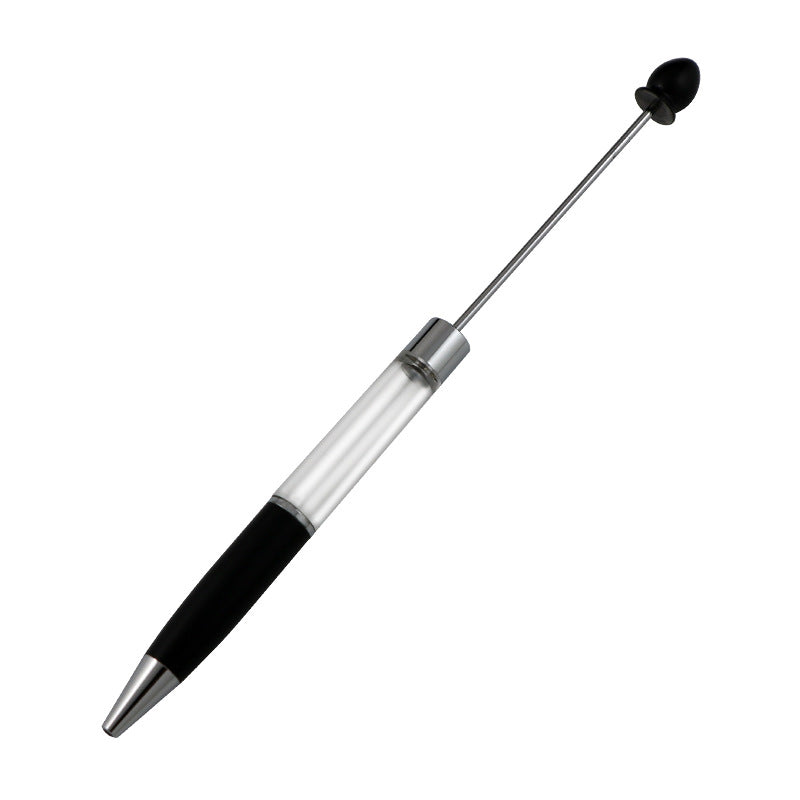
A straightforward way to make beaded pens is to start with a purpose-built beadable pen blank. Choose the blank first, select beads and decorative components that fit its beadable section, test the complete arrangement before forcing anything into place, assemble the pen according to that blank’s construction, and then confirm that the finished pen still closes, writes, and operates normally.
The most important step before assembly is checking compatibility between the specific pen blank and the specific beads you want to use. Beadable pen systems do not all use identical dimensions or closures, and specialist supplier guidance warns that nominal fit recommendations can have exceptions or change with manufacturing variations.
For a beginner, the basic supply list usually starts with a purpose-built pen blank, compatible decorative or focal beads, optional spacer beads, and any topper or fastener required by that particular blank system. A replaceable ink refill can also be useful if you want the finished pen to remain usable after the original ink runs out.
Key Takeaways
- Start with a purpose-built beadable pen blank rather than assuming every retractable pen uses the same construction.
- Choose the blank before ordering a large quantity of beads.
- Check the bead opening, blank construction and full decorative stack before assembly.
- Focal beads, supporting beads and spacer beads can serve different design roles.
- Do not assume that a bead described as 12 mm, 15 mm or 16 mm will fit a particular pen. Outside bead diameter and bead-hole diameter are different measurements.
- Do not assume that glue, wire or cord is required. Some purpose-built systems hold the beads directly on a rod with a mechanical fastener.
- Build and test one complete pen before repeating the same combination in quantity.
- If you plan to sell beaded pens, verify the design first and calculate the actual finished cost afterward.
What Is a Beadable Pen?
A beadable pen is a pen designed to accept decorative components on a dedicated part of the pen body.
The exact construction depends on the blank.
For example, ZoeDIY describes its own beadable pen blanks as including a pen body, center rod, threaded top fastener and one original black ink refill. Beads, spacers, focal pieces and pen toppers are selected separately. That is a ZoeDIY-specific system, but it illustrates why a purpose-built blank is easier to plan around than treating every pen as if it has the same construction.
Cara & Co demonstrates another purpose-built system. In its tutorial, the user removes the end cap, slides selected beads onto the beadable section and then secures the cap again. Its instructions also show a separate process for replacing the ink refill.
These examples do not establish one universal assembly method. They show why the first step should be understanding the actual blank you are using.
Before selecting decorative components, determine how the blank opens, where the beads sit, how much usable space is available and how the closure works.
For buyers comparing current options, AccsWholesale’s beadable pen collection includes both plastic and metal beadable pen products. The collection currently lists 100 products, with 100 shown as in stock, providing multiple body styles and price points to compare.

What Supplies Do You Need to Make Beaded Pens?
A purpose-built beadable pen project does not necessarily require a large tool kit. The essential requirement is that the decorative components work with the selected blank.
A practical starter setup includes a beadable pen blank, compatible focal or decorative beads, optional supporting or spacer beads, the correct closure or topper for the selected system, and a working ink refill.
Do not automatically treat beading wire, elastic cord, crimp beads or glue as required supplies. Those materials may appear in other craft methods, but a purpose-built beadable pen can use a direct-on-rod construction instead.
Beadable Pen Blank
The blank is the foundation of the design. Its body material, weight, beadable area, closure and refill system determine what the rest of the design can accommodate.
AccsWholesale currently lists the V Electroplating Color Beadable Pens Plastic DIY Bead Pens, Item No. ACC-PN-HuaHao020, at $0.37. The official page lists a minimum quantity of 2, 6 g weight, plastic material and Product Type Pen. The page currently displays an Add to cart option.
AccsWholesale also lists the Metal Empty Beadable Pen, Item No. ACC-BP-BF003, at $1.75. Its official page lists a minimum quantity of 1, 20 g weight, metal material and Product Type Ballpoint Pen, with multiple steeple and dome color variants. The page currently displays Add to cart.
These examples show why “beadable pen blank” should not be treated as one identical product. Even within the same supplier, material, weight, minimum quantity, style and price can differ.
Focal Beads
For a simple beginner design, a focal bead can serve as the main decorative element, while smaller beads or spacers support the color or theme.
AccsWholesale currently lists ACC-BDS-WDX203, a 10-piece Silicone Bee Focal Beads product, with MOQ 1, listed weight 40 g and material silicone.
The verified current product price is $7.20 for 10 pieces, which equals $0.72 per focal bead before shipping or other order-level costs.
That unit calculation is useful for budgeting, but the product should not automatically be combined with a specific pen blank in a finished-cost calculation. The official pages do not establish that every focal bead SKU fits every beadable pen SKU.

Spacer Beads
Spacer beads can be used between larger decorative pieces or to adjust the visual arrangement of a design.
AccsWholesale’s ACC-BDS-ZiGe001 is a 50-piece wave spacer bead product. The official page lists MOQ 1, weight 50 g, material iron, and 6 mm and 8 mm variants.
At the verified current price of $2.07 for 50 pieces, the listed pack price works out to approximately $0.041 per spacer, before shipping and other costs.
That does not mean a maker should simply add more spacers. The complete arrangement still needs to fit the usable beadable section and leave enough room for the pen’s closure to work correctly.

How to Choose the Right Beadable Pen Blank
Choose the blank before buying a large quantity of decorative components.
Buying beads first can create a preventable compatibility problem if their openings, thicknesses or combined stack do not work with the chosen pen.
First, inspect the construction of the blank. Look for available information about the pen body, beadable rod or section, top closure, refill access and usable decorative space.
Next, consider body material and weight.
The two verified AccsWholesale examples show a substantial difference. ACC-PN-HuaHao020 is listed as a 6 g plastic pen, while ACC-BP-BF003 is listed as a 20 g metal ballpoint pen.
Those are blank-level weights. The final pen will also include whatever decorative components are added, so the completed product should still be evaluated after assembly.
Repeatability also matters if you plan to make the same design more than once. A component combination that has already been tested on the exact blank is more useful for repeat production than an attractive combination whose fit has not been checked.
What Size Beads Do You Need for Beadable Pens?
There is no verified universal bead size that can be applied to every beadable pen.
The first distinction to understand is outside bead diameter versus bead-hole diameter.
A bead may be marketed as 12 mm, 15 mm, 16 mm or another size, but that does not by itself tell you whether its opening can pass over the rod or beadable section of your pen.

ABC Bead Supply provides a useful supplier-specific example. Its current beadable pen listing says the pen has a 1.7 mm beadable post. The same page also warns that the seller is not responsible for beads failing to fit and notes that variations can occur between batches. Its separate compatibility guide describes its recommendations as general guidance that can have exceptions or manufacturing changes.
The 1.7 mm figure belongs to ABC’s listed product. It should not be transferred to an AccsWholesale, ZoeDIY, Cara & Co or other supplier’s pen.
ZoeDIY provides another supplier-specific example. Its current blank guide describes an approximate 1.8 mm center rod for its own general blank system, but explicitly tells buyers to confirm the actual bead opening, shape, thickness, stack height and thread engagement. It also states that outside diameter alone does not determine the bead opening required.
The practical rule is therefore: Check the specific bead opening against the specific pen blank, then check the complete stack rather than relying on one advertised bead diameter.
A recent discussion in r/Beading provides a small piece of user-level evidence for why this matters. One commenter said they had difficulty finding enough large-hole beads for beaded pens, and the original poster replied that finding the right size can sometimes be difficult. This is anecdotal feedback rather than evidence about all makers, but it illustrates a real compatibility problem that individual users encounter.
If you need a deeper comparison of bead types, sourcing routes and bead compatibility, the existing AccsWholesale guide Where to Buy Beads for Beadable Pens: Types, Sizes & Suppliers covers that purchasing question in more detail.
How to Make a Beaded Pen Step by Step
For a beginner, the most reliable approach is to follow the construction of the specific beadable pen blank you purchased instead of applying one supplier’s assembly procedure to every pen.
Step 1: Check the Pen Before Decorating It
Make sure the blank writes and that its refill or retracting mechanism works before adding decorative components.
Identify how the decorative section opens and closes. If the seller provides instructions for that blank, use those instructions.
For example, Cara & Co’s own metal beadable pen tutorial begins by twisting off the end cap. ZoeDIY describes its own system as having a threaded top fastener. These are useful examples of beadable pen construction, but they do not establish the assembly method for an AccsWholesale blank or any other supplier’s blank. Cara & Co’s tutorial was published on June 1, 2022.

Step 2: Plan the Bead Arrangement
Lay the focal bead, supporting beads and spacers beside the pen before placing them on the blank.
This gives you a chance to evaluate the arrangement and estimate whether the complete stack is likely to fit the available decorative space.
If you are using one larger focal piece, position it first and then decide how many supporting or spacer beads are actually necessary.
Step 3: Dry-Fit the Components
Test the decorative components on the actual blank before committing to a batch.
A bead that does not pass normally over the required part of the pen should not simply be forced into place. Fit can be affected by the opening, coating, shape and manufacturing tolerances.
ZoeDIY specifically tells buyers to check rod-and-hole fit and to consider the full stack, not only nominal component measurements.
For someone planning to make multiple pens, testing one complete combination first can prevent the same incompatibility from being repeated across a larger order.
Step 4: Add the Components in the Planned Order
Once the components have passed the fit check, place them on the beadable section according to your planned arrangement.
On Cara & Co’s purpose-built system, its official tutorial instructs the maker to remove the end cap, slide the chosen beads onto the pen and screw the end cap back on.
That procedure is evidence for Cara & Co’s system only.
If your selected blank uses a different closure or structure, use the instructions provided for that system instead.
Step 5: Close the Pen Without Forcing It
The closure should engage normally and securely.
If the complete decorative stack prevents the fastener from closing correctly, remove or rearrange components rather than forcing the closure.
This is why a set of beads that fits individually may still fail as a complete design. Total stack height matters as well as individual bead openings.
Step 6: Test the Finished Pen
A finished beaded pen still needs to function as a pen.
Check that it writes normally, that any retracting mechanism still works, that the closure remains secure and that the decorative components do not prevent normal operation.
If the design uses a replaceable refill, also confirm that the decorative assembly has not made refill access impractical.
Cara & Co publishes separate refill instructions for its system, and ZoeDIY states that its blanks include one replaceable original black ink refill. These are examples of supplier-specific refill systems rather than universal specifications.
Do You Need Glue to Make Beaded Pens?
Not always.
Whether adhesive is needed depends on the specific blank and decorative method.
Cara & Co’s basic beadable pen tutorial uses a removable end cap and direct bead placement as its core assembly process rather than requiring glue for the bead stack.
Other component systems may use adhesive in particular applications, but that does not establish a universal glue requirement.
Do not automatically apply E6000, super glue or another adhesive simply because it appears in a generic tutorial.
First check how the actual blank is designed to close. If a specific component requires adhesive, follow the instructions for that material and system.
If a pen is mechanically secured and does not require adhesive, unnecessary glue can also make later disassembly or refill access less convenient.
How to Design a Balanced Beaded Pen
A simple beginner design can start with one main decorative component and use smaller supporting pieces around it.
Instead of filling every available space, first decide which component should provide the main visual theme. Then add only the beads or spacers needed to support that arrangement while keeping the full stack within the available space.
AccsWholesale’s current Beads Collection contains silicone focal beads, acrylic bead products and multiple spacer-bead products, including items explicitly described for DIY bead-pen use.
That assortment provides different component categories to compare, but presence in the same collection is not evidence that every bead SKU is compatible with every beadable pen blank.
Compatibility still needs to be confirmed for the actual combination being assembled.
Common Beaded Pen Mistakes
Most avoidable beginner problems occur before or during assembly.
Buying a Large Bead Order Before Testing the Blank
Choose a pen system and test the intended components before repeating the same combination in quantity.
Confusing Bead Diameter With Bead-Hole Diameter
An advertised outside dimension does not by itself tell you whether the bead can pass over the pen’s rod.
Use the detailed compatibility check rather than treating one external bead size as universal.
Copying Another Supplier’s Rod Specification
ABC currently specifies a 1.7 mm post for its listed pen, while ZoeDIY describes an approximate 1.8 mm center rod for its own general system. Neither number establishes the rod diameter of an AccsWholesale product.
Making a Large Batch Before Completing One Sample
Complete one pen first and check fit, closure, writing function and visual arrangement before repeating the design.
Adding Glue Without Confirming That It Is Needed
A mechanical beadable-pen system may not require glue for its basic bead stack.
Do not add adhesive by default.
Ignoring the Writing Function
A decorative design is incomplete if the pen no longer closes, retracts or writes normally.
Functional testing should be part of the final assembly check.
How to Make Beaded Pens to Sell
If you plan to sell beaded pens, consistency becomes more important.
Start with one tested component combination rather than buying a large number of unverified parts.
Record the exact blank, focal bead, spacers and other decorative pieces used in the successful sample. If you change one component, test the new combination again.
Low listed minimum quantities can make initial testing easier.
For example, the verified AccsWholesale plastic blank ACC-PN-HuaHao020 currently has MOQ 2, while the metal ACC-BP-BF003 has MOQ 1.
Component costs can also be converted to a unit basis.
At the verified listed price, a $7.20 pack of 10 ACC-BDS-WDX203 focal beads equals $0.72 per focal bead.
A $2.07 pack of 50 ACC-BDS-ZiGe001 spacer beads equals approximately $0.041 per spacer.
Those values should not be added to a particular pen blank and presented as a finished-pen cost unless the actual components have first been confirmed to fit together and the exact quantity used in the finished design is known.
Finished component cost = pen blank + actual beads used + actual spacers used + topper or accessory + refill if applicable + packaging + allocated shipping or order costs.
Selling fees and labor would then need to be considered before deciding whether the final selling price is profitable.
For a full pricing and profit analysis, the AccsWholesale article How Much Do Beaded Pens Sell For? Pricing, Costs & Profit addresses that question separately.

Where Can Small Sellers Buy Beadable Pen Blanks and Beads?
Different sourcing routes emphasize different tradeoffs. Small sellers can compare specialist suppliers, wholesale catalogs and multi-brand marketplaces based on the blanks or components offered, minimum quantities, compatibility information and ordering model.
AccsWholesale
AccsWholesale offers both a dedicated Beadable Pen Collection and a broader Beads Collection.
The verified pen examples used in this guide include plastic and metal blanks with listed minimum quantities of 2 and 1 respectively, while the Beads Collection includes silicone focal beads, acrylic bead products and spacers.
This gives a small seller a route for comparing blanks and decorative components within the same wholesale catalog.
The limitation is important: finding a blank and a bead on the same website does not prove those two particular SKUs fit each other.
ABC Bead Supply
ABC Bead Supply provides unusually explicit information for its own current beadable pen.
Its product page lists the pen at $0.95, says pens are sold individually, states that its reduced pricing has no minimum, and specifies a 1.7 mm beadable post. The same page also warns about possible bead-fit and batch variations.
Its separate compatibility guide reinforces that these recommendations should be treated as guidelines rather than universal guarantees.
Hands On Supply
Hands On Supply operates a specialist beadable-pen catalog. Its current beadable-pens collection displays 830 products, giving buyers a large specialized assortment to browse.
A specialist catalog can be useful when the buyer wants to compare multiple beadable-pen styles without starting from a general craft marketplace.
Happy DIY Hunting
Happy DIY Hunting also operates a dedicated beadable-pens collection.
Its current collection filter shows 149 in-stock results and 6 out-of-stock results, with listings that include themed, character and rhinestone-oriented beadable pen styles.
That makes it a relevant sourcing route when decorative or themed blank variety is part of the buying decision.
Faire
Faire represents a different sourcing route because it is a multi-brand wholesale marketplace rather than one specialist supplier.
Its current beadable-pen-supplies discovery environment includes products from multiple brands, while Faire states that its broader wholesale platform contains products from more than 100,000 brands.
A marketplace can therefore help with supplier discovery, while a specialist product page may provide more detailed specifications for a particular blank system.
When comparing sources, the useful question is not simply which supplier has the largest catalog or lowest visible price. Compare whether the source provides the blank type, component selection, minimum quantity and compatibility information needed for the design you actually plan to make.
FAQ
Are beaded pens profitable?
They can generate a positive margin when the selling price exceeds the complete cost of the finished pen, but profitability cannot be determined from the blank price alone.
Calculate the actual components used, packaging, allocated shipping, selling fees and labor before deciding whether a design is profitable.
The separate AccsWholesale pricing and profit guide covers this calculation in more depth.
What size beads do you need for beadable pens?
There is no verified universal size.
Check the bead opening against the specific beadable section or rod and confirm that the complete decorative stack leaves enough room for the pen to close correctly.
What glue should I use for beaded pens?
Do not assume glue is required.
Some purpose-built systems use a mechanical fastener for the basic bead stack. Follow the construction of the specific blank and only use adhesive when the selected component or supplier instructions actually require it.
Can I use silicone beads on a beadable pen?
Silicone beads are sold for beadable-pen projects, but material alone does not establish compatibility.
Check the opening and full-stack fit against the specific blank.
Can I use acrylic beads?
Acrylic bead products are also sold for DIY bead-pen use, but the individual bead still needs to fit the chosen blank.
Do I need spacer beads?
No. Spacer beads are optional.
Use them when they help the arrangement, but make sure the complete stack still fits the available beadable space.
Can I use an ordinary pen instead of a beadable pen blank?
The assembly method in this guide is designed around purpose-built beadable pen blanks.
An ordinary pen should not be assumed to have the same rod, closure or decorative structure, so it should not be substituted into these instructions without a separate method designed for that pen.
Should beginners buy a beadable pen kit?
A kit can simplify shopping when its contents are clearly identified and designed to work together.
Do not assume that a product labeled as a kit automatically contains every blank, bead, spacer, refill or decorative component you may need. Check the listed contents first.
How many beads fit on one pen?
There is no universal bead count.
The answer depends on the thickness and shape of the components, available decorative space and the closure of the selected blank.
Dry-fit the complete arrangement instead of relying on a fixed count from another pen system.
Can I make custom or character-style beaded pens?
You can create themed arrangements from available colors, focal beads, spacers and other decorative components.
That does not establish that a supplier provides custom-logo, customer-artwork, private-label or personalized manufacturing services. Those services should only be claimed when the supplier explicitly offers them.
How should I test a beaded pen before selling it?
Check that the decorative components are secure, the closure is properly engaged, the pen writes normally, the retracting mechanism works when applicable, and refill access remains usable if the blank is designed for replacement refills.
Repeat the test when you change the blank or component combination.
Final Answer
To make a beaded pen, start with a purpose-built beadable pen blank, choose decorative components that have been checked against that exact blank, plan and dry-fit the full arrangement, assemble it according to the blank’s actual construction, secure the closure without forcing it, and test the finished pen as a writing tool.
The most important technical mistake to avoid is assuming that all beadable pens and beads are interchangeable. Outside bead diameter, bead-hole diameter, rod dimensions, component thickness and available closure space can all affect whether a design works.
For a beginner, one successful test pen provides more useful information than a large untested component order. Once a combination works, record the exact blank and components before repeating it.
For a small seller, apply the same rule when sourcing: compare blanks, components, order minimums and compatibility information for the design you intend to make rather than choosing only by catalog size or visible unit price.
A reliable beaded pen is one that can be assembled correctly, closed securely, used normally and reproduced consistently.
Explore Beadable Pen Blanks
Browse current beadable pen options and product details before choosing a blank for a test design.
Explore Beadable PensRelated Posts

Where to Buy Keychain Rings: Types, Prices & Low-MOQ Suppliers
This guide explains where to buy keychain rings for small businesses comparing low-MOQ sourcing options. It covers split rings, colored...
Read More
Is Sterling Silver Good for Rings? Pros, Cons & Buying Guide
Is sterling silver good for rings? This guide helps retailers and jewelry sellers evaluate 925 sterling silver for everyday, wedding,...
Read MoreInvalid password
Enter