


Access Denied
IMPORTANT! If you’re a store owner, please make sure you have Customer accounts enabled in your Store Admin, as you have customer based locks set up with EasyLockdown app. Enable Customer Accounts
Is Turquoise Jewelry Expensive? Prices & Value Guide
Posted By AccswholesaleBlog
on
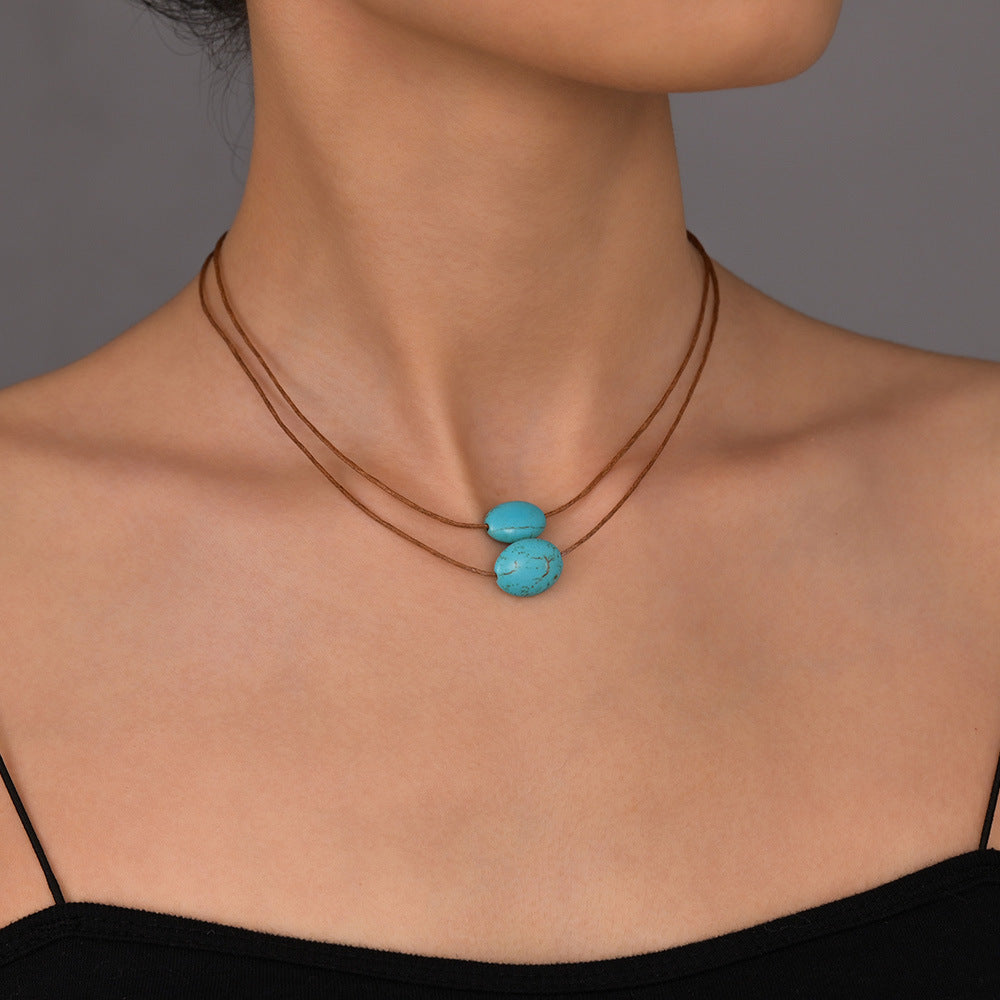
Turquoise jewelry can be inexpensive, moderately priced, or highly valuable. Its price depends on the material's identity and treatment, stone quality and appearance, setting metal, craftsmanship, and supporting documentation. A turquoise-colored fashion accessory is not automatically comparable to fine jewelry made with documented natural turquoise.
Key Takeaways
- Compare products with the same material identity and treatment status.
- Stabilized turquoise can still be genuine turquoise; treatment disclosure matters.
- A mine name, bright color, or high asking price does not prove rarity or authenticity.
- Metal, construction, craftsmanship, maker information, and provenance also affect price.
- Check exact product specifications before making gemstone or metal claims.
Why Does Turquoise Jewelry Have Such Different Prices?
Turquoise jewelry prices vary because buyers may be comparing products that only look similar at first glance. Two blue-green rings can have different materials, construction, treatments, and levels of craftsmanship. Their prices may therefore reflect very different things.
Before comparing prices, separate the main factors.
- Material identity: Is the stone genuine turquoise, another mineral, a composite, or a fashion component?
- Treatment: Is it untreated, stabilized, dyed, reconstituted, or otherwise enhanced?
- Appearance and quality: What are the color, texture, surface condition, and matrix patterns like?
- Origin and documentation: Is a claimed source supported by reliable information?
- Setting and construction: Is the jewelry made with sterling silver, gold, a base-metal alloy, or another material?
- Craftsmanship and provenance: Who made the piece, how was it constructed, and is its history documented?
These factors work together. A genuine turquoise stone is not automatically high grade, and a fashion piece is not automatically poorly made. The right comparison depends on what the buyer wants: a collectible gemstone, a durable everyday accessory, a distinctive design, or merchandise at a particular retail price point.
What Makes Turquoise More Valuable?
Color and Consistency
Color is one of the first things people notice about turquoise. Buyers may prefer bright blue, deeper blue, greenish blue, or more varied shades. Some value an even, consistent appearance, while others prefer stones with visible variation and natural-looking patterns.
A vivid blue color can be desirable, but color should not be used as the only measure of quality. Lighting, photography, surface finish, treatment, and the individual buyer's taste can all affect how a stone appears. A photograph on a product page may also display a color differently from the item in natural light.
When assessing a piece, look at the color in more than one photograph if available. Ask whether the seller describes the color as natural or enhanced, and whether any treatment has been applied. Do not assume that a particularly bright or uniform blue proves that a stone is natural or untreated.
Texture, Porosity, and Durability
Turquoise is not valued on color alone. Its physical condition and texture matter too. Natural turquoise can vary in hardness, porosity, and suitability for cutting and setting. More porous material may be less durable in everyday wear and may be more likely to receive treatment to improve its stability.
This is one reason treatment disclosure matters. A seller should explain whether a stone has been stabilized or otherwise treated rather than leaving the buyer to guess from appearance. Buyers should also consider how they plan to wear the jewelry. A delicate stone used in a ring that receives frequent contact may need more careful handling than a piece worn occasionally.
The Gemological Institute of America (GIA) provides background on turquoise characteristics and buying considerations in its Turquoise Buyer's Guide. Its educational material is useful for understanding why material properties and treatment should be considered together.
Matrix and Natural Patterns
The matrix is the pattern of host rock or mineral material visible within or around turquoise. It may appear as fine lines, web-like patterns, darker patches, or other contrasting markings. Some buyers seek stones with distinctive spiderweb patterns; others prefer a more uniform appearance with little visible matrix.
There is no universal rule that more matrix makes a turquoise stone more valuable. The pattern's appearance, the stone's overall quality, buyer preference, and the market for a particular type all matter. A dramatic pattern may be desirable to one collector and less appealing to another buyer.
It is also important not to confuse a pattern that looks like natural matrix with proof of origin or authenticity. A photograph cannot, by itself, establish that a stone is genuine turquoise, identify its mine, or verify that it has not been treated.
Origin, Rarity, and Documentation
Some turquoise sources have established reputations among collectors. A documented origin can be relevant when a buyer is evaluating a collectible stone, particularly when the source is associated with distinctive material or limited availability.
However, a mine name in a product title is not enough to establish value. The seller should be able to explain the basis for the origin claim and provide appropriate documentation when the claim materially affects the price. A famous source does not guarantee that every stone from that source is high quality, and an attractive stone should not be assigned a premium origin without evidence.
For everyday buyers, it may be more useful to focus on the actual stone, its treatment, condition, and workmanship than to pay extra for an origin claim that cannot be substantiated.
Natural vs. Stabilized, Dyed, and Imitation Turquoise
The word “turquoise” can be used in product descriptions in different ways. Understanding the distinctions helps buyers compare like with like and avoid paying a gemstone premium for a material that has not been accurately described.
Natural, Untreated Turquoise
Natural, untreated turquoise is material that has not undergone stabilization or color enhancement. Some natural turquoise is sufficiently firm and suitable for jewelry without stabilization. Material quality can vary, however, so “natural” does not automatically mean flawless, durable, or top grade.
If a seller describes a stone as natural and untreated, ask what supports that description. For a high-value purchase, documentation or an assessment from a qualified gemological professional may be appropriate. Appearance alone is not a reliable way for most buyers to determine treatment status.
Stabilized Turquoise
Stabilized turquoise is genuine turquoise that has been treated, commonly to improve its durability and make it more suitable for jewelry. Stabilization does not automatically mean that the material is fake. It does mean the stone has been modified, and the treatment should be disclosed.
Stabilized turquoise can be a practical option for buyers who want the appearance of genuine turquoise in a piece intended for regular wear. Its value should be considered in light of the material's quality, the treatment, the setting, and the overall workmanship—not judged solely by whether it is untreated.
Dyed or Otherwise Enhanced Material
Some turquoise material may be dyed or otherwise enhanced to change or strengthen its appearance. The exact process and its effect on value depend on the material and treatment used. Buyers should ask sellers to state clearly whether color has been added or altered.
A seller's description should distinguish between natural color and enhanced color. If the treatment is not disclosed, do not assume that the stone's appearance is natural.
Reconstituted Material and Imitations
Reconstituted material may be made by combining small fragments or particles with a binding material. Imitation turquoise may use a different mineral, synthetic material, or fashion component to create a turquoise-like appearance. These materials can be used in decorative jewelry, but they are not interchangeable with a solid natural turquoise gemstone.
The important point is accurate labeling. A lower-cost fashion accessory may be suitable for a buyer who prioritizes design and price. It should not be represented as rare, untreated turquoise if the material does not support that claim.
When a listing is unclear, ask the seller directly: “Is this genuine turquoise, stabilized turquoise, dyed material, reconstituted material, or an imitation?” A clear answer is more useful than relying on a product photograph.
The Setting and Craftsmanship Also Affect the Price
The gemstone is only one part of a finished piece of jewelry. The metal, construction, labor, design, and maker can all influence the price.
Metal and Setting
A turquoise stone set in sterling silver is not directly comparable with a turquoise-colored component set in a base-metal alloy. Precious metals have their own material value, while base-metal settings may be chosen to support a more accessible fashion price.
Buyers should check the exact metal description. Terms such as “silver tone,” “silver plated,” and “sterling silver” do not mean the same thing. If a listing says sterling silver, look for clear product specifications and appropriate marks or documentation. Do not infer metal content from a silver-colored appearance.
The same principle applies to gold. Gold-plated, gold-filled, and solid-gold products are different categories. A seller should identify the actual construction rather than rely on a general color description.
Construction and Workmanship
A well-made setting can require careful cutting, shaping, polishing, stone fitting, and finishing. More elaborate designs may require additional labor. The quality of the setting also affects how securely a stone is held and how comfortable the jewelry is to wear.
Hand fabrication and detailed silverwork can contribute to the value of a piece, but such claims should be supported by the seller's description or maker information. Do not assume a piece is handmade simply because it has a traditional or rustic appearance.
Maker, Provenance, and Collectibility
A recognized artist, documented history, age, or collectible design can influence what buyers are willing to pay. For some pieces, the maker's identity and provenance may matter as much as the stone.
If a seller describes a piece as Native American-made or attributes it to a specific artist or community, the claim should be accurate and supported. Cultural identity and maker attribution should never be inferred from a Southwestern-style design, a motif, or the presence of turquoise-colored material.
A high price may reflect artistry, provenance, or collectibility, but buyers should ask what evidence supports those claims.
How to Judge Whether a Turquoise Jewelry Price Is Reasonable
There is no single checklist that can appraise every piece, but a few questions can help buyers make a more informed comparison.
- What is the actual material? Confirm whether the item contains genuine turquoise, another mineral, a composite, or a turquoise-look fashion component.
- Has the material been treated? Ask whether it is untreated, stabilized, dyed, reconstituted, or otherwise enhanced.
- Is the treatment disclosed? A clear listing should not leave a material treatment question unanswered when it affects the product's identity or value.
- Is the origin claim documented? If a mine or geographic source is used to justify a premium, ask what evidence supports it.
- What metal is used? Confirm whether the setting is sterling silver, gold, plated metal, or a base-metal alloy.
- Who made the piece? For artisan or collectible jewelry, look for maker identification, signature, provenance, or other supporting information.
- What explains the price? Consider the stone, treatment, metal, labor, design, age, brand, and documentation together.
Compare products with similar materials and construction. Comparing a stabilized turquoise cabochon in sterling silver with a turquoise-color fashion accessory made with an alloy setting will not produce a meaningful like-for-like price comparison.
For a valuable purchase, ask for additional photographs, written treatment disclosure, metal specifications, and relevant documentation before paying a premium. If the seller cannot substantiate a claim that is central to the price, treat that claim cautiously.
Affordable Turquoise-Style Jewelry vs. Fine Turquoise Jewelry
Not every buyer is looking for a collectible gemstone. Some want a coordinated accessory, a seasonal design, or an affordable piece that brings turquoise color into an outfit. Those are different shopping goals from buying natural untreated turquoise with documented origin.
For retailers, the distinction is equally important. Product descriptions should accurately identify the listed material and metal. A turquoise-inspired fashion accessory can be merchandised on its design, color, style, and price point without being described as a fine natural gemstone.
The following AccsWholesale listings illustrate why material descriptions matter. The product details below reflect the supplied listing information and should not be read as independent gemological authentication.
Green Turquoise Inlaid Fashion Ring
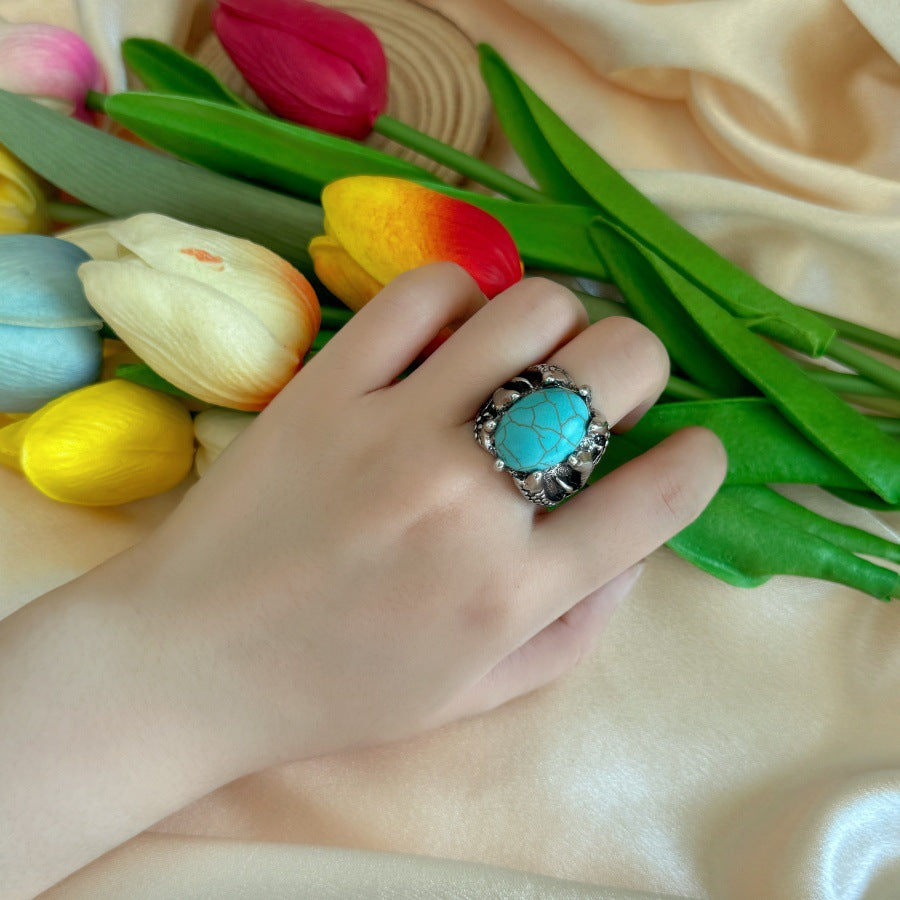
The Wholesale Inlaid Green Turquoise Ring is listed with a zinc-alloy material, a listed weight of 7 g, and a minimum order quantity of one. The product has four variants.
For a buyer comparing fashion accessories, the relevant points are its inlaid green-turquoise appearance, ring design, listed alloy construction, and available variants. The listing information does not establish that the inlay is natural, untreated turquoise, and the alloy setting should not be described as sterling silver.
Retailers should use the product's actual listing details when writing descriptions and should confirm variant-specific information before placing an order. Its role in this comparison is as an example of a turquoise-look fashion ring, not as a benchmark for the value of fine turquoise gemstones.
Turquoise Turtle Necklace, Bracelet, and Earring Set

The Wholesale Vintage Turquoise Turtle Necklace Bracelet Earring Set is a coordinated jewelry set. The supplied product listing identifies the material as “Turquoise,” gives a listed weight of 40 g, and specifies a minimum order quantity of one. The source snapshot records one variant and a price of USD 2.30.
The material wording should be attributed to the listing. The available product information does not independently verify the gemstone identity, treatment status, mine origin, or whether the material is natural and untreated. Buyers who need those details should request clarification from the seller before using more specific claims in retail marketing.
As a set, the product can be evaluated for its coordinated necklace, bracelet, and earring design. Its listing price is a wholesale source snapshot, not a retail valuation of natural turquoise.
Turquoise-Style Bohemian Earrings

The Wholesale Turquoise Earrings Alloy Earrings Bohemian Earrings listing identifies the material as metal, gives a listed weight of 15 g, and specifies a minimum order quantity of two. It has 14 variants.
The earrings are relevant to the fashion-accessory side of the market because their design uses a turquoise-style look. The supplied material information does not establish that the decorative components are genuine turquoise gemstones, nor does it identify the metal as sterling silver or another precious metal.
Retailers should check the individual variant, SKU, price, and product image when selecting styles. The 14-variant structure makes it especially important not to assume every variant has identical appearance or details without checking the listing.
Western-Style Bull Head Multi-Layer Necklace

The Wholesale Western Style Turquoise Bull Head Multi-layer Necklace is listed with a zinc-alloy material, a listed weight of 5 g, a minimum order quantity of one, and one variant. The supplied source snapshot records a price of USD 3.06.
Its Western-style bull-head design and turquoise-color appearance are the appropriate points to describe. The listing does not establish natural turquoise, sterling silver, handmade production, or Native American provenance. Those claims should not be added without separate evidence.
These four examples show why retailers should distinguish between the appearance of a product and the verified materials used to make it. A listing can be useful for comparing design, weight, minimum order quantity, and variants while still leaving gemstone treatment or authenticity questions unanswered.
Wholesale Sourcing Considerations for Retailers
Retailers sourcing turquoise jewelry should begin with the type of merchandise they intend to sell. A store focused on affordable fashion accessories may prioritize design variety, consistent supply, minimum order quantities, and price. A store selling fine gemstone jewelry will need much more detailed information about stone identity, treatment, metal content, maker, and provenance.
Before choosing a supplier or product, compare the following:
- Material disclosure: Does the listing identify the stone or decorative material and the setting metal clearly?
- Treatment information: If the item is represented as genuine turquoise, does the supplier explain whether it is untreated, stabilized, dyed, or otherwise enhanced?
- Minimum order quantity: Is the MOQ appropriate for a test order or the store's buying plan?
- Variant details: Are sizes, colors, styles, SKUs, and variant images clearly identified?
- Consistency: Can the supplier explain whether repeat orders are likely to match the original product in design and material?
- Photography: Do the images show the actual item and relevant details rather than only a generic styled photograph?
- Reordering: Are popular variants likely to remain available, and can the supplier explain its replenishment process?
- Landed cost: Have shipping, duties where applicable, and other purchase costs been considered rather than looking only at the listed unit price?
A retailer should also make sure that the product page and in-store description use the same level of certainty as the supplier's evidence. If a supplier only identifies a material as “turquoise,” do not automatically rewrite that as “natural untreated turquoise.” If the setting is listed as an alloy, do not market it as sterling silver.
Retailers exploring wholesale turquoise jewelry can use collection and product listings to review available designs and their stated specifications. Before making a purchase decision, check each individual product page for current variant information, material descriptions, minimum order quantities, and pricing. Product listings are the starting point for evaluation; any additional gemstone-authenticity or treatment claim should be confirmed separately.
Final Thoughts
Turquoise jewelry can be affordable or expensive because the category includes many different materials, treatments, settings, and levels of workmanship. The most useful comparison is not simply one price against another. It is a comparison of products with similar material identity, treatment, metal, construction, documentation, and intended use.
If you are buying for personal wear, ask what the stone is, whether it has been treated, and what metal is used. If you are buying for a retail store, make sure the supplier's product information is detailed enough to support the claims you plan to make to customers. Clear descriptions help prevent confusion between natural gemstone jewelry and turquoise-style fashion accessories.
A good buying decision starts with accurate information. Look at the material, treatment, construction, and evidence behind the listing before deciding whether a turquoise jewelry price is reasonable.
Frequently Asked Questions
Is stabilized turquoise real turquoise?
Stabilized turquoise can be genuine turquoise. Stabilization is a treatment used to improve the material's durability or suitability for jewelry. It is different from imitation material, but it is also different from untreated turquoise. Sellers should disclose the treatment so buyers can compare products accurately.
Does a turquoise mine name automatically make a stone more valuable?
No. A mine name alone does not prove a stone's quality, authenticity, or origin. The actual material, its appearance and condition, the credibility of the origin information, and the workmanship of the finished piece all matter. If a mine name is being used to justify a premium, ask for supporting documentation.
Is turquoise jewelry expensive if it is set in sterling silver?
Sterling silver can contribute to the cost of a finished piece, but it does not determine the entire value. The turquoise's identity, quality, treatment, size, and the setting's workmanship also matter. A sterling silver setting does not automatically make the stone rare or untreated, and a silver-colored alloy should not be described as sterling silver.
How can buyers tell whether turquoise has been treated?
A photograph alone is not enough to reliably determine whether turquoise has been stabilized, dyed, or otherwise treated. Ask the seller for a written disclosure and supporting information. For a high-value purchase, consider an assessment from a qualified gemological professional rather than relying only on appearance or a product title.
Explore Wholesale Turquoise Jewelry
Review available designs and check each product listing for material descriptions, variants, minimum order quantities, and current pricing. Browse Turquoise Jewelry
Browse Turquoise JewelryRelated Posts

Is Turquoise Jewelry Still in Style in 2026? Trends & Styling
Turquoise jewelry remains visible in 2026 fashion coverage, from small-bead necklaces to expressive earrings and bracelets. Discover how to style...
Read More
Why Do Cowgirls Wear Turquoise Jewelry? Western Heritage & Style
Why do cowgirls wear turquoise jewelry? This article explains how turquoise became associated with Western style while tracing the deeper...
Read MoreInvalid password
Enter