


Access Denied
IMPORTANT! If you’re a store owner, please make sure you have Customer accounts enabled in your Store Admin, as you have customer based locks set up with EasyLockdown app. Enable Customer Accounts
What Does 925 Mean on Jewelry? 925 Sterling Silver Explained
Posted By AccswholesaleBlog
on

925 on jewelry means the item is represented as sterling silver containing 92.5% silver by weight and 7.5% other metals, commonly copper. This alloy is used because pure silver is relatively soft for many everyday jewelry designs. The 925, .925, and S925 marks are common ways of describing the same nominal silver fineness. A hallmark is a useful identification clue, not independent proof that a particular piece was made from the claimed metal. Color, price, weight, seller documentation, and appropriate professional testing provide additional context. If a piece marked 925 is gold-colored, it may be gold-plated sterling silver rather than solid gold.
Key Takeaways
- A 925 fineness mark indicates an intended alloy of 925 parts silver per 1,000 parts total metal, or 92.5% silver by weight.
- Sterling silver is real silver, but it is not the same composition as fine silver, often described as 999 silver.
- 925, .925, S925, and Sterling are related marking conventions, not different silver purity grades by themselves.
- A stamp can be counterfeit or used misleadingly, so verify the actual item before making a strong authenticity claim.
- Tarnish can occur on genuine sterling silver and is not, by itself, evidence that an item is fake.
- Gold-colored 925 jewelry may have gold plating on a sterling-silver base; 925 is not a gold-karat number.
- Value depends on the actual silver weight, spot-price context, craftsmanship, condition, brand, and the type of buyer.
- Additional letters such as Italy, A, or CN need context; do not invent a maker, country, or purity from a short code alone.
- Retailers should inspect product-specific materials, selected variants, sample quality, and total landed costs before placing larger orders.
1. What Does 925 Mean on Jewelry?
The number 925 is a measure of fineness: the silver component accounts for 925 of every 1,000 parts of the alloy by weight. As a percentage, 925 divided by 1,000 equals 92.5%. The remaining 75 parts per 1,000 equal 7.5% and are other alloying metals, commonly copper. Jewelry sellers call this material sterling silver. The extra metals help make silver jewelry suitable for shapes and applications where pure silver would be less practical. It is accurate to say sterling silver is genuine silver; it is inaccurate to say it contains only silver.
In the United States, the FTC's jewelry guidance and the relevant jewelry industry regulations provide useful references for silver-purity descriptions. These rules address how metals may be described in marketing. They do not mean that a random stamped ring has already been tested or certified. A mark tells you what the item purports to be, and confidence grows when that statement matches the seller's specifications and the actual metal. An unmarked item is also not automatically fake: some jewelry designs or tiny components may lack a readable stamp.
2. Is 925 Real Silver? Sterling Versus Fine and Silver-Plated Jewelry
Yes: an accurately described 925 alloy is real silver. The word sterling describes a silver alloy with a specified silver fraction, rather than a costume-metal imitation. The distinction matters because a consumer might hear 'not pure silver' and incorrectly infer 'not real silver.' Most modern sterling jewelry is deliberately alloyed. A material can be real silver without being chemically pure silver, just as jewelry labeled with another precious-metal fineness can contain an intentional combination of metals.
Fine silver is commonly marked 999 or described as 99.9% silver. Compared with 925 sterling, it contains a greater fraction of silver and less alloying material. That does not make fine silver automatically the better choice for every ring, chain, or clasp. Design, work hardening, thickness, construction, and use matter. Sterling is often chosen for wearable pieces because the alloy offers useful practical characteristics, while fine silver has its own applications. The two descriptions should not be swapped just because both are legitimate silver materials.
Silver-plated jewelry is a separate construction. A plated piece has a surface coating of silver over a different underlying material. Sterling silver, by contrast, describes the bulk metal alloy of a sterling component, rather than a decorative silver-colored coating. A bright silver finish is not a purity test: steel, brass with plating, and other materials can have similar appearances in a photograph. Read the materials line for terms such as 'sterling silver,' 'silver-plated,' 'stainless steel,' or 'silver tone,' and ask the seller which parts those terms cover. A 925 mark should not be used to justify describing a merely plated base-metal product as solid sterling silver.
3. What Do 925, .925, S925, Sterling, and 925 Italy Mean?
925 and .925 express the same nominal fineness in different visual formats. The leading decimal point in .925 corresponds to the fraction 0.925, or 92.5%. S925 commonly combines a letter used to suggest silver with the 925 numeral. The word Sterling also communicates a sterling-silver claim. None of these marking styles, taken alone, establishes that a laboratory or hallmarking authority independently authenticated a specific piece. A tiny or partly worn stamp may be hard to read, so inspect it under good light before treating an ambiguous character as definitive.
The phrase 925 Italy generally combines a sterling-fineness representation with a geographical word. It is often encountered on jewelry presented as Italian or made in Italy, but the appearance of the word does not independently verify where an individual item was manufactured. Ask for the seller's stated country of origin and supporting provenance when origin is important to your purchase. The same caution applies to a recognizable-looking stamp or an engraving that resembles a designer mark: typography and placement are not reliable substitutes for documentation.
Searches for '925 A' and '925 CN' are common because shoppers notice extra letters next to the purity number. Without the entire hallmark, a clear photograph, a manufacturer record, and the item's context, a single A or CN cannot be assigned one universal meaning. It may be a maker's identification, an internal production code, an origin-related marking, or part of another stamping system. Do not promise that A means a particular grade or that CN confirms a particular manufacturer. When investigating an unusual mark, photograph the full inscription and nearby symbols, identify the seller, and compare with documented maker information.
4. Does a 925 Stamp Guarantee Genuine Sterling Silver?
No. A 925 stamp indicates a claimed silver purity; it is not a tamper-proof certificate. Counterfeit or misrepresented goods can carry familiar marks. Conversely, an authentic item might have an obscured or missing mark because of its size, wear, repairs, or design. Treat the stamp as the beginning of an assessment. This distinction appears consistently in the consumer questions and AI response examples supplied for the current topic, but those examples identify what people ask, not the authenticity of any particular item.
Start with the product's origin and description. Is the merchant identifying the entire piece as sterling silver, or only the ear post, clasp, or base? Do the invoice and listing specify the alloy and any plating? Are you comparing a seller's stock photograph with the precise variant you intend to receive? Keep a record of those claims. A suspiciously inconsistent listing deserves questions, but low price, high price, a photograph, or a familiar number alone cannot conclusively prove or disprove metal content.
5. How Much Is 925 Jewelry Worth?
925 sterling silver has real precious-metal content, but there is no single value for every ring, chain, bracelet, or pair of earrings. The value of an item can be considered in at least three different ways: the theoretical silver content, the value of a finished piece sold at retail, and the amount a secondhand dealer or buyer is willing to pay. These figures need not match. The current market silver price changes, while product workmanship, condition, gemstones, brand, and customer demand can change what a finished item is worth.
For a component that is actually sterling silver, an illustrative metal-content calculation is: sterling-metal weight in grams × 0.925 = approximate grams of pure silver contained in that alloy. This is a composition calculation, not an appraisal. For example, a hypothetical plain sterling component weighing 10 grams contains about 9.25 grams of silver by mass. The equation assumes the measured weight belongs to the sterling alloy alone. It must not be applied to the gross weight of a stone-set piece that includes gemstones, non-silver hardware, adhesives, or other materials unless their weights have been separated.
A ring weighing a few grams can have a low theoretical silver-content value but a materially higher retail price because manufacturing, stone setting, design, fulfillment, and seller costs are involved. A branded or antique piece may command a premium that is unrelated to its raw silver content. The reverse is also possible: a used or damaged item may receive an offer nearer to its recoverable metal value, subject to a buyer's policies. A seller advertising a fixed 'value per gram' without specifying whether it means metal content, buying price, or retail price can confuse buyers.
6. What Does 925 Mean on Gold-Colored Jewelry?
A gold-colored ring or necklace stamped 925 is commonly presented as a sterling-silver piece with a gold-colored finish. One possible construction is gold plating over a sterling-silver base. The 925 designation, when accurate, describes the silver alloy underneath; it is not the karatage of the gold layer and is not evidence that the whole object is solid gold. A yellow or rose-gold appearance can result from different finishes, so the color alone does not identify the coating material or its thickness.
Gold vermeil has a specific meaning under U.S. marketing guidance: it is not simply a synonym for any gold-colored sterling piece. The FTC explains requirements involving a sterling-silver base and minimum gold fineness and coating thickness. Consequently, do not label a product 'vermeil' unless its actual specifications support that description. 'Gold-plated sterling silver,' 'gold-tone sterling silver,' and 'solid gold' are distinct claims and should not be used interchangeably. The product page should say what metal is beneath the finish and what is known about the layer.
For further detail on plating terminology and durability, see the separate AccsWholesale guide about gold-plated sterling silver. The essential answer is short: 925 does not mean 925-karat gold, and gold color does not override an accurate sterling-silver base-metal description.
7. Does 925 Sterling Silver Tarnish, and How Should You Care for It?
Yes, genuine sterling silver can tarnish. Tarnish is a surface change associated with the metal's environment and its alloy, not automatic proof that the metal is counterfeit. Storage, moisture, airborne compounds, personal-care products, and exposure during wear can affect how quickly a piece darkens. Two genuine sterling items may behave differently because their finishes and environments differ. A photograph of tarnished jewelry cannot establish its precise composition without further information.
For routine care, gently wipe jewelry with a suitable soft cloth and store it clean and dry in an appropriate container. A silver polishing cloth may help with ordinary surface tarnish, but follow the jeweler's guidance for delicate finishes. Do not assume every cleaning method suitable for bare sterling is suitable for a gold-plated or oxidized design. Abrasives can damage intentional surface treatments, and aggressive chemicals can affect stones, adhesives, or decorative finishes. The safest method depends on the entire piece, not just a hallmark on one component.
Take care with gemstone settings, pearl-like decorations, glued elements, and plated surfaces. If you do not know what a stone or coating is, avoid soaking or chemical dips until the construction has been identified. Dry the piece carefully after any appropriate cleaning. Ask a professional before polishing a valuable antique or a design whose dark recesses are intentionally oxidized for contrast, because removing those details can change the look and value of the item.
8. Where Is the 925 Stamp on Rings, Necklaces, Bracelets, and Earrings?
On a ring, look inside the band or near the base of a setting where a hallmark will not dominate the design. On a necklace, inspect the clasp, end tag, connecting ring, and pendant bail. On a bracelet, check the clasp, small tag, or inside surface of a metal component. On earrings, a tiny mark may be on a post, backing, or another accessible metal surface. These are common inspection areas, not rules that guarantee every genuine item must be stamped in a particular spot.
Use adequate light and magnification if needed. First read the entire sequence rather than isolating only the number 925. Adjacent characters can be maker marks, finish information, or another code that changes how the item should be researched. If the stamp is worn, photograph it from several angles without scratching or grinding the metal to 'reveal' a marking. An inconclusive photograph warrants a cautious answer, not a confident identification invented from three blurry characters.

9. How Can Retailers Check 925 Jewelry Before Buying Wholesale?
Retailers face the same hallmark question as consumers, plus an obligation to describe inventory accurately. A supplier's statement that an item is S925 or sterling silver is relevant evidence, but a retailer should still examine the product description, selected variant, and the actual pieces received. Request clarity about which components are sterling, whether a finish is plated, and which accessories are not included in that claim. Keep materials information at the SKU or variant level rather than assuming all options under a parent product share the same construction.
For a first purchase, review the official listing and record the exact product URL and variant. Check the stated minimum quantity, weight description, shipping terms, and return policy. If a number is inconsistent between a page description and its variant structured data, do not quietly select whichever figure is more attractive. Ask the supplier which specification applies to the item you intend to order, or omit that number from customer-facing copy until it has been reconciled.
Order a small representative sample where the terms allow it. Examine construction, clasp operation, finish consistency, stone security, and the match between the received variant and its photograph. For claims about metal purity, request suitable supporting records and consider independent testing where the risk or order size warrants it. A sample inspection confirms only what was actually inspected; it does not prove that every future production batch will be identical. Note the date and batch or SKU in your records.
For relevant product exploration, browse wholesale 925 sterling silver jewelry at AccsWholesale. The collection provides a commercial destination for readers who have moved from understanding a hallmark to evaluating available styles. Its presence in this informational article does not imply that every product has undergone independent laboratory testing, nor does it turn the article into a ranked list of the 'best' suppliers.
10. What Can Actual AccsWholesale Product Listings Illustrate?
Official product examples help demonstrate why a single 925 label does not settle every buying question. The AccsWholesale S925 black-stone full-circle ring is a visual example of a dark-finish ring where color and decorative stones should be considered separately from the stated metal. The product photograph is useful for understanding the appearance of that variant; it is not an assay, proof of a specific gemstone identity, or a claim about all of the product's components. A close-up of a dark ring also cannot establish whether the finish beneath the visible surface is the same as that of another sterling product.
A separate product listed under an S925 snake-ring parent illustrates how naming and selected-variant visuals can diverge in emphasis. The supplied Silver / Adjustable variant picture shows an open-style ring with a pink pear-shaped stone and a visible S925 stamp. The image can accurately be captioned as the selected ring appearance without inventing a serpent motif that is not obvious in the actual view. The manufacturer's or supplier's title is a record of the parent listing, not a reason to claim a pictured visual feature that is not present.
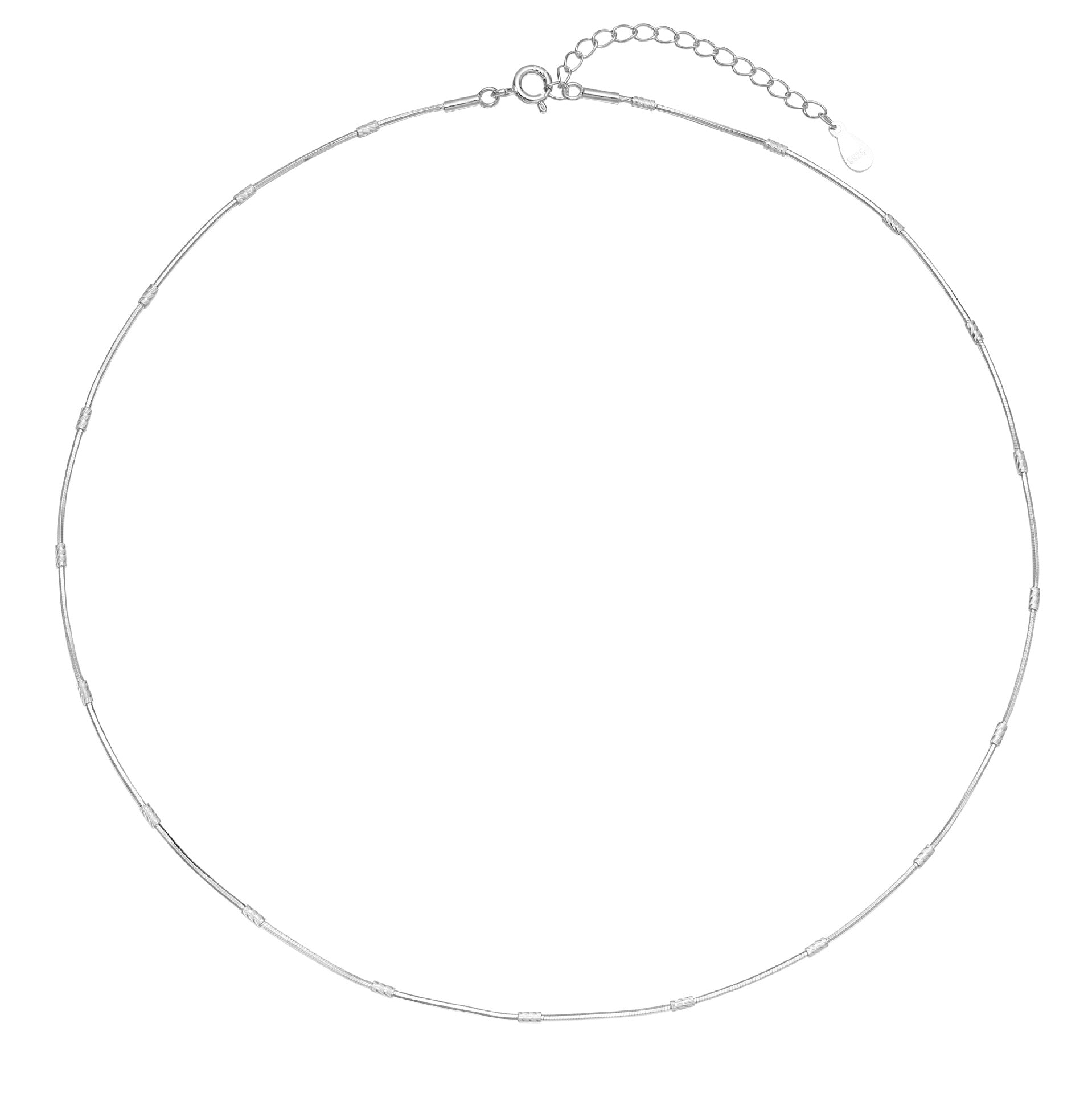
A sterling-silver chain listing provides a different use case: a chain's material description, style, clasp, length, and weight are distinct pieces of information. The supplied silver-tone chain image is suitable for discussing why clasps and metal components deserve inspection. However, the page's descriptive weight and its variant-level structured-data weight are inconsistent in the evidence set. Accordingly, this article does not reproduce either number as verified. A reader needing the exact mass should obtain a product-specific clarification rather than infer weight from a catalog image or another chain's specification.
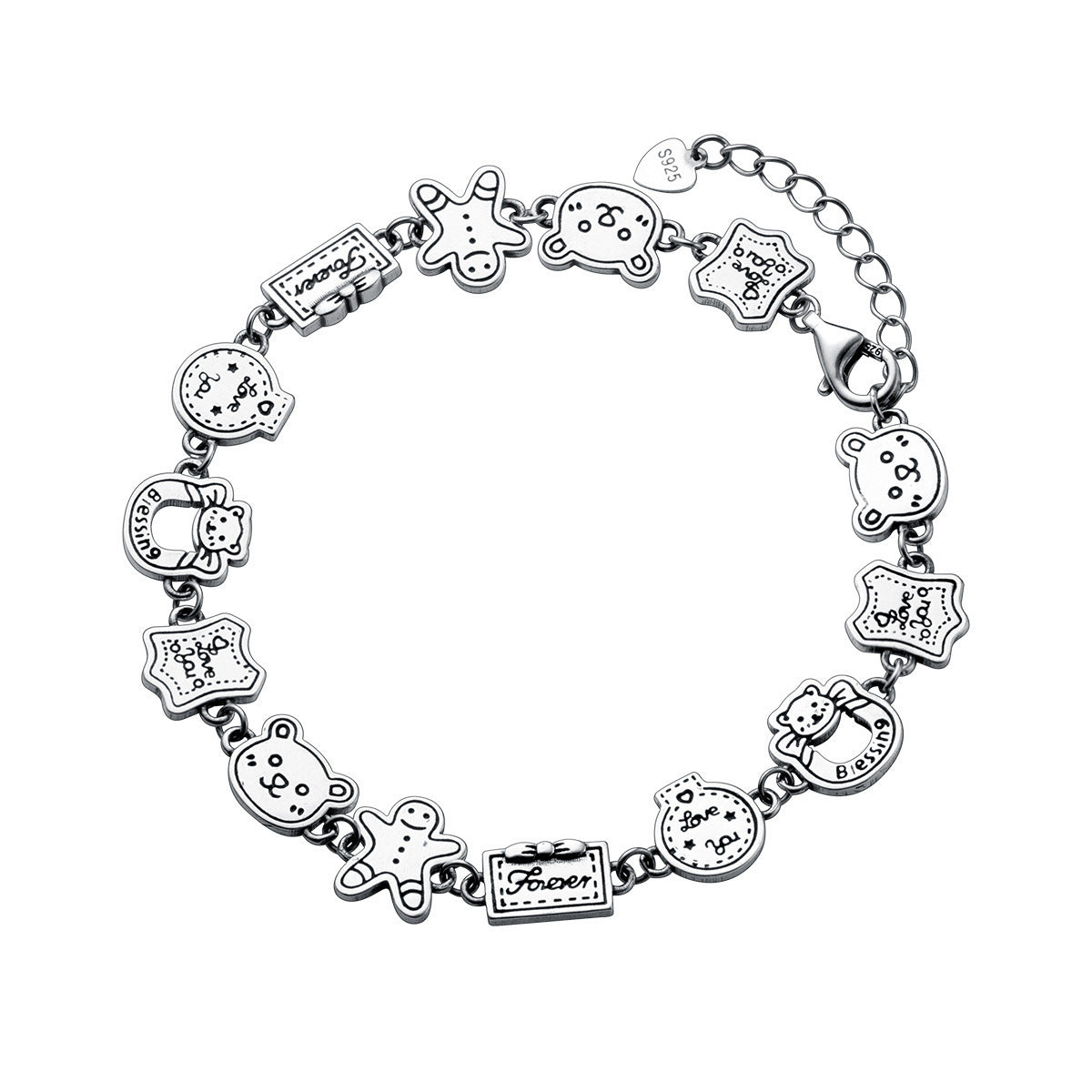
A gingerbread-man and bear design bracelet illustrates how an item can contain multiple decorative metal elements with a small S925-labeled tag in the photo. The official listing provides a jewelry identity, but it also contains inconsistent weight figures across the description and selected-variant metadata. As with the chain, the exact weight is not asserted here. The picture is useful for discussing where small metal tags can be found and why a visible hallmark should be interpreted with the product's materials record rather than assumed to certify every attachment.
11. Frequently Asked Questions About 925 Jewelry
Is 925 real silver or fake silver?
When accurately used, 925 means sterling silver, an alloy containing 92.5% silver by weight. The hallmark is a claim of fineness, not proof that a particular untested object is genuine. Compare the product's materials documentation with the item itself and obtain professional testing when authenticity matters.
Does 925 mean the jewelry is 92.5% silver?
Yes. The number corresponds to 925 parts silver per 1,000 parts alloy by weight. The remaining 7.5% is commonly other metals such as copper. Decorative stones, coatings, and separate components must not automatically be counted as part of the sterling alloy.
Is 925 silver good quality for everyday jewelry?
Sterling silver is widely used for wearable jewelry, but quality depends on more than fineness. Inspect construction, weight appropriateness, joints, clasps, settings, finish, and the seller's representations. A 925 stamp alone does not guarantee craftsmanship or long-term durability.
What does 925 mean on a gold ring?
It indicates a claimed sterling-silver base, not a solid-gold karat value. A gold-colored piece may be plated or otherwise finished. Ask the seller which metal is underneath and whether the coating meets any specific claimed standard, such as vermeil.
What does 925 Italy mean on jewelry?
It combines a 925 sterling-fineness claim with the word Italy, commonly used in an origin-related context. The stamping alone does not independently establish where an individual item was made. Verify country-of-origin information and supporting documentation when that matters.
What does S925 mean on a necklace or ring?
S925 is a common marking style used to represent sterling silver. It does not denote a separate purity level from 925 or .925 by itself. Assess the actual item and product documentation rather than treating the initial letter as an authentication guarantee.
What does 925 A or 925 CN mean?
The 925 portion represents a sterling-silver claim. Additional letters cannot be interpreted with certainty without the complete mark and maker or product context. Avoid assigning a universal country, manufacturer, or grade from a short sequence alone.
Does 925 sterling silver tarnish or turn black?
It can tarnish and darken in some conditions. Surface tarnish is not inherently evidence of fake silver. Cleaning methods should take account of stones, intentional oxidized finishes, and gold plating; abrasive or chemical treatment can damage some designs.
How much is one gram of 925 silver worth?
It depends on the current silver price and the definition of value. In one gram of genuine sterling alloy there are nominally 0.925 grams of silver by mass. The metal-content estimate is not the same as a buyer's offer, a jewelry retail price, or the value of a complete object containing stones and other materials.
Can I sell or pawn 925 jewelry?
Possibly, but acceptance and offers depend on the buyer, condition, confirmed composition, weight, and current market demand. A hallmark does not guarantee acceptance or a particular return. Get a specific quote and ask what the appraisal covers.
How can I tell whether my 925 ring is genuine?
Read the full stamp, check the seller's materials statement and records, and inspect the actual item. If the result matters financially, consult an appropriate professional for testing. Neither appearance nor an ordinary at-home magnet check conclusively proves authenticity.
Final Answer: What Does 925 Mean on Jewelry?
The 925 mark indicates that a jewelry component is represented as sterling silver containing 92.5% silver and 7.5% other metals by weight. It is real silver when the claim is accurate, but the stamp itself does not authenticate the object. Look for clear material specifications, understand the difference between sterling, fine silver, and plating, and investigate unusual letters or origin stamps instead of assuming they have one universal meaning. Real sterling can tarnish, and a gold-colored 925 item may have a gold coating over its sterling base. For value, distinguish intrinsic silver content from retail pricing and offers from secondhand buyers. For business purchases, validate the selected product and variant before representing its composition to customers.
Explore Sterling Silver Jewelry
If you're comparing styles for resale, start with the relevant AccsWholesale collection and review the currently listed materials and product-specific terms. The commercial catalog is a next step for buyers, not a substitute for hallmark interpretation or metal verification. Explore wholesale 925 sterling silver jewelry.
Explore Sterling Silver JewelryRelated Posts

Is Turquoise Jewelry Still in Style in 2026? Trends & Styling
Turquoise jewelry remains visible in 2026 fashion coverage, from small-bead necklaces to expressive earrings and bracelets. Discover how to style...
Read More
Why Do Cowgirls Wear Turquoise Jewelry? Western Heritage & Style
Why do cowgirls wear turquoise jewelry? This article explains how turquoise became associated with Western style while tracing the deeper...
Read MoreInvalid password
Enter