




Access Denied
IMPORTANT! If you’re a store owner, please make sure you have Customer accounts enabled in your Store Admin, as you have customer based locks set up with EasyLockdown app. Enable Customer Accounts

Where to Buy Things in Bulk to Resell Without Overbuying
Posted By AccswholesaleBlog
on

If you are deciding where to buy things in bulk to resell, start by choosing the type of source that fits your buying stage rather than automatically choosing the supplier with the lowest displayed unit price.
Resellers can source inventory through specialized wholesalers, wholesale marketplaces, manufacturer and supplier marketplaces, wholesale directories, liquidation marketplaces, trade shows, and local distributors.
These sourcing routes solve different problems.
A specialized wholesaler can make sense when you need focused, ready-stock products that can be tested and reordered. A wholesale marketplace can help you discover retail-ready brands. A manufacturer marketplace becomes more relevant when customization or larger production runs matter. A supplier directory helps you discover potential vendors. Liquidation marketplaces focus on returns, overstock, and opportunistic inventory. Trade shows and local distributors add a physical sourcing option.
The best route depends on what you are selling, how much inventory risk you can accept, whether demand is already proven, and whether you need the exact product to be available again.
Choose the sourcing route → calculate Real Cost → measure Inventory at Risk → test sell-through → replenish what works → scale only when the evidence supports a larger commitment.
That answers more than simply where to buy. It helps determine where you should buy at your current stage without overbuying.
Key Takeaways
- Choose the sourcing model before choosing the supplier. A specialized wholesaler, marketplace, manufacturer, directory, liquidation source, and trade show solve different sourcing problems.
- Displayed wholesale price is not Real Cost. Freight, applicable duties or taxes, storage, packaging, preparation, selling fees, and expected losses can materially change the economics.
- MOQ does not tell you the whole inventory risk. Total merchandise commitment and how that inventory is distributed across products matter.
- Testable inventory and scalable inventory are different buying stages. A new product should normally prove demand before the business optimizes for deeper purchasing.
- Replenishable inventory has different value from one-time liquidation inventory. Buyers should know whether they are building repeatable supply or taking an opportunistic lot.
- AccsWholesale occupies a specific sourcing role. It is most relevant as an accessory-focused wholesale option rather than as a replacement for every marketplace, manufacturer, or liquidation source.
The article follows the same decision path a reseller actually faces:
Where can I buy?
→ Which type of source fits me?
→ Is this specific order worth placing?
→ What will it really cost?
→ How much should I test?
→ Can I reorder the winner?
→ When should I scale?
That keeps the supplier comparison tied to a real purchasing decision instead of becoming another list of wholesale websites.
Where Can You Buy Things in Bulk to Resell?
You can buy resale inventory through six main sourcing routes: specialized wholesalers, wholesale marketplaces, manufacturers or manufacturer marketplaces, supplier directories, liquidation marketplaces, and physical sourcing channels such as trade shows or local distributors.
The important question is not simply which website has the largest catalog.
It is which sourcing model matches the job you need the supplier to perform.
| Sourcing route | Example | Best fit | Main issue to evaluate |
|---|---|---|---|
| Specialized wholesaler | AccsWholesale | Focused, ready-stock accessory inventory | Category fit, MOQ, Real Cost, replenishment |
| Wholesale marketplace | Faire | Retail-ready products and brand discovery | Brand-specific minimums and terms |
| Manufacturer / supplier marketplace | Alibaba | Manufacturing, customization, larger-scale sourcing | Supplier verification, specifications, freight |
| Supplier discovery | Wholesale Central | Finding wholesalers, distributors and manufacturers | Individual suppliers still require verification |
| Liquidation marketplace | B-Stock | Returns, overstock and liquidation inventory | Condition, lot composition, freight, repeatability |
| Physical sourcing | Trade shows / local distributors | In-person product and supplier discovery | Geography, travel, order terms, assortment |
A reseller testing accessory demand is solving a different problem from a company commissioning a large custom production run.
A liquidation buyer is solving another problem entirely.
That is why the first decision should be:
What type of supply relationship do I need right now?
Which Sourcing Route Fits Your Buying Stage?
The right route can change as uncertainty decreases.
Testing an unproven product: prioritize flexibility
When you do not yet know whether an item will sell, the ability to test demand without committing too much merchandise cash can be more valuable than achieving the lowest theoretical unit price.
Current AccsWholesale product pages provide useful examples.
A Christmas Tree Reindeer Keychain was verified at $1.88 with MOQ 1, PVC material, a 40 g product weight, and Add to cart availability at the time reviewed.
A Black Letter Italian Charm was verified at $0.97 with MOQ 1, stainless steel construction, a 3 g product weight, and SKU ACC-CHS-5803229105382-M1.
A Liquid Metal Pleated Wide Ring was verified at $1.23 with MOQ 1, a 9 g product weight, and material listed as metal and imitation pearl.

These examples do not mean every AccsWholesale product has MOQ 1.
They demonstrate a narrower point: some individual products currently allow very small merchandise commitments, which can give a reseller room to learn before buying deeply.
Proven demand: scale and specifications matter more
Once a product consistently sells, the decision changes.
A buyer may start caring more about larger-volume economics, custom specifications, packaging, production consistency, samples, lead time, and supplier capacity.
That is where manufacturer sourcing and supplier marketplaces such as Alibaba can become more relevant.
Alibaba provides Verified Supplier and Trade Assurance mechanisms, but those tools do not remove the buyer's responsibility to define specifications, understand the order terms, evaluate samples where appropriate, and calculate the total cost of receiving the goods.
Manufacturing is therefore not automatically “better” than wholesale.
It becomes more useful when demand is sufficiently proven to justify the extra commitment and complexity.
Opportunistic buying: treat liquidation as a separate model
B-Stock represents a different inventory model based around liquidation, returns, and overstock in different categories, conditions, and lot sizes.
The evaluation criteria change accordingly.
A liquidation reseller may care heavily about:
- lot condition
- manifest or lot information
- freight
- processing labor
- unsellable merchandise
- storage
- whether similar inventory can be sourced again
A liquidation lot should therefore not be evaluated with exactly the same criteria as a replenishable accessory SKU.
Neither route is universally better. They serve different buying strategies.
Use the 5-R Framework to Decide Whether a Specific Order Is Worth Buying
Once you know which sourcing routes could work, evaluate the actual order.
The five questions are:
Risk
Real Cost
Rate of Sale
Reorderability
Retail Fit
1. Risk: How much merchandise cash is exposed?
MOQ alone does not measure inventory risk.
You also need to calculate the merchandise commitment created by the price and MOQ.
For example, the verified Italian Charm Starter Bracelet is currently $9.22 with MOQ 2.
Minimum merchandise commitment:
$9.22 × 2 = $18.44
The verified Black Letter Italian Charm is currently $0.97 with MOQ 1.
At almost the same merchandise budget:
$0.97 × 19 = $18.43

Both examples put approximately the same amount of merchandise cash at risk before shipping or other applicable costs.
But they create very different inventory structures.
Two starter bracelets create depth in one product type. Nineteen lower-cost units can create more testing capacity, depending on the actual assortment and variants chosen.
This is why a reseller should compare:
MOQ + price + number of sellable units + assortment structure
rather than MOQ alone.
2. Real Cost: What will the inventory cost when it is ready to sell?
The displayed wholesale price is only the beginning.
A useful calculation is:
Real Cost = Merchandise + Freight + Applicable Import Costs + Receiving / Preparation + Selling-Channel Costs + Expected Losses
Not every order contains every category.
The purpose of the formula is to force the buyer to identify which costs actually apply.
For example, imagine an illustrative order containing 20 units at $2 each:
Merchandise: $40
If inbound freight is $15 and preparation costs add $5:
Total before selling-channel costs = $60
The effective inventory cost has already changed from:
$2.00 per unit → $3.00 per unit
before marketplace fees, customer shipping, returns, or other costs.
That is why a supplier with the lowest quoted unit price does not automatically produce the lowest Real Cost.
For U.S. importers, import treatment also deserves attention. The previous broad duty-free de minimis treatment for qualifying low-value imports was suspended, and the suspension continued under federal action in 2026. Exact duties still depend on the merchandise, origin, and applicable rules, so buyers should calculate their own landed cost instead of assuming that a small international shipment is automatically duty-free.
3. Rate of Sale: How quickly can the inventory turn back into cash?
A bulk discount helps only when the business can eventually sell the units.
Suppose a supplier offers a better price at a quantity far above your proven demand.
You may lower the unit cost while increasing the amount of cash trapped in slow-moving stock.
For a new SKU, the first order should therefore answer questions:
- Does the product attract interest?
- Can it sell at the expected retail price?
- Which variants move first?
- Do customers buy one or several?
- How quickly does inventory convert back into cash?
The purpose of the test order is not merely to acquire stock.
It is to acquire information about demand.
4. Reorderability: Can you source the winner again?
If a product sells well, reorderability can become a commercial asset.
You may already have product photography, marketplace listings, merchandising, ads, search visibility, and customer demand built around that SKU or product family.
A repeatable supply relationship lets you continue using those assets.
AccsWholesale currently maintains dedicated wholesale categories covering areas such as keychains, Italian charms, jewelry, DIY and beadable items, and fashion accessories. That structure is relevant to a replenishment-oriented sourcing strategy.
Liquidation is different.
A particular return or overstock lot may be attractive precisely because it is temporary. The exact inventory may not appear again.
The buyer therefore needs to decide whether the business model depends on:
repeatable supply
or
continually finding new opportunistic inventory.
5. Retail Fit: Does the source fit the customer you actually serve?
Start with the end customer.
A boutique that wants independent brands may find Faire relevant.
A seller developing a custom or private-label product may move toward manufacturing.
A liquidation reseller may intentionally accept irregular inventory in exchange for different acquisition opportunities.
An accessories retailer testing keychains, charms, jewelry, beadable products, or hats may have more use for a specialized wholesaler.
The most famous supplier is not automatically the right supplier.
The source should fit the customer, merchandise strategy, and buying stage.
How Should a Small Reseller Build the First Test Order?
The first order should be designed to answer a business question.
Start with the customer and work backward.
First estimate a realistic selling price on the channel where you actually expect to sell the product.
Then determine the maximum Real Cost that leaves enough economic room for your business.
Only after that should you select the product and supplier.
This prevents the common sourcing pattern:
Find something cheap → buy it → then try to discover who wants it.
A controlled test works in the opposite direction:
Customer need → realistic retail price → maximum acceptable cost → sourcing route → test quantity → sell-through data → reorder decision
Different products create different minimum merchandise commitments.
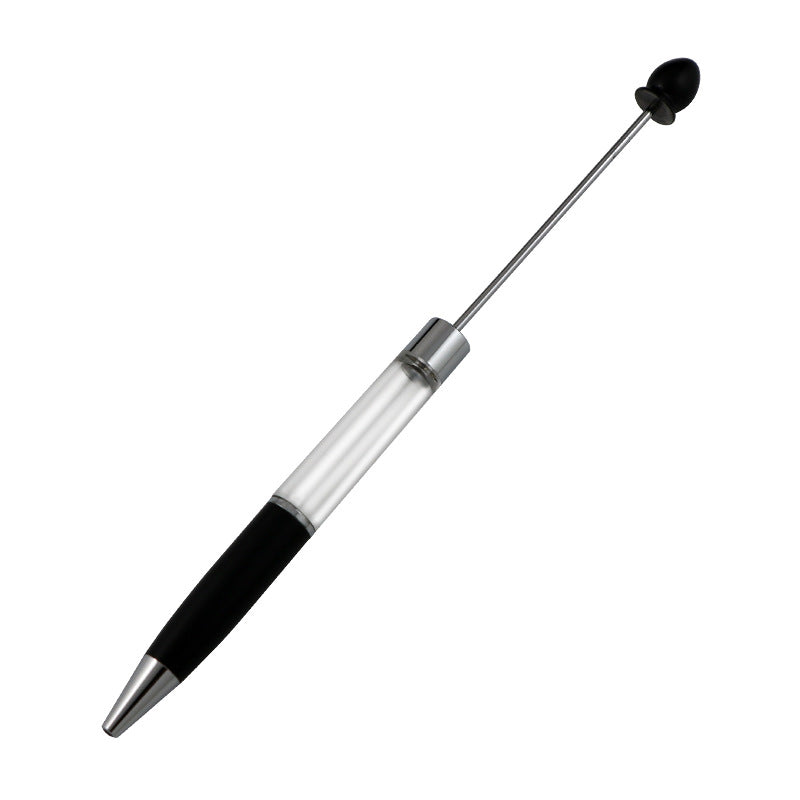
The verified DIY Beadable Pen is currently $1.75 with MOQ 1, metal material, a 20 g weight, and Add to cart availability.
The Cotton Embroidered Bucket Hat is currently $6.71 with MOQ 2, cotton material, a 120 g weight, and Add to cart availability.
Its minimum merchandise commitment is:
$6.71 × 2 = $13.42
The verified Red Square Chinese Earrings are currently $2.47 with MOQ 1, copper material, a 10 g weight, and Add to cart availability.
These numbers are not evidence that pens, hats, or earrings are more profitable than another category.
They demonstrate how product selection changes:
cash commitment
unit count
assortment breadth
and the amount of information you can gather from a test
before you place a larger order.
If the first order produces weak sell-through, the right decision may be to reject the SKU rather than increase quantity simply to obtain a better unit price.
If demand proves strong, the next order can be deeper.
When Does “Cheap Wholesale” Become Expensive Inventory?
Cheap wholesale becomes expensive when the business saves on unit price but loses flexibility, cash flow, or sell-through.
This does not mean small orders are always better.
A proven bestseller repeatedly running out of stock may justify deeper inventory.
The useful rule is:
Buy shallow while uncertainty is high. Buy deeper when evidence improves.
The broader wholesale market also illustrates how significant inventory is as a capital category. The U.S. Census Bureau reported $958.9 billion in merchant-wholesaler inventories at the end of July 2026.
That figure applies to merchant wholesalers, not small AccsWholesale customers or individual resellers. It should not be interpreted as proof that small businesses are currently overstocked.
Its relevance is narrower:
inventory represents a major amount of capital in wholesale commerce, and the buyer needs a plan for turning that inventory back into cash.
Should You Buy Bulk Inventory Online, Nearby, or at a Trade Show?
Online sourcing usually offers broader discovery.
Physical sourcing can add inspection, face-to-face supplier contact, faster pickup in some cases, or exposure to products you may not discover through search.
Online routes include specialized wholesalers, marketplaces, supplier platforms, directories, and liquidation marketplaces.
Trade shows provide a different discovery environment.
ASD Market Week currently describes itself as a B2B consumer-merchandise event with 1,800+ vendors, more than 1 million product lines, and more than 19 merchandise categories.
That makes trade shows a genuine sourcing route rather than simply a networking event.
Local distributors and cash-and-carry wholesalers can also be useful when physical access matters.
However:
nearby does not automatically mean cheaper or better.
A local supplier may offer faster access but a narrower assortment or different pricing. An international supplier may offer attractive factory pricing but introduce freight, import, lead-time, or order-complexity considerations.
Compare:
Real Cost
selection
inspection ability
minimum commitment
lead time
and replenishment
rather than distance alone.
How Should You Verify a Wholesale Supplier Before Ordering?
Verification should match the sourcing model.
Specialized wholesaler
Check:
- actual product page
- SKU
- current price
- MOQ
- material and specifications where relevant
- current availability
- shipping information
- return policy
- reorderability
For AccsWholesale, the current return policy states that return requests generally need to be made within 25 days after receipt, require prior approval and tracking, and place return-shipping responsibility on the buyer. Custom items and production orders have separate restrictions unless damaged or defective.
Its shipping policy currently states that most orders require approximately 2–5 business days of processing before shipment, while transit and shipping costs depend on destination, weight, dimensions, and shipping method.
Those terms belong in the buying decision alongside price and MOQ.
Wholesale marketplace
Faire currently operates as an online wholesale platform connecting retailers with brands.
Do not assume there is one universal Faire MOQ.
Faire's current retailer terms allow individual brands to set their own order minimums, and those minimums can differ between opening orders and reorders.
Evaluate the individual brand as well as the marketplace.
Manufacturer or supplier marketplace
Alibaba offers Verified Supplier and Trade Assurance mechanisms.
These can be useful components of supplier verification, but they do not replace:
- clear specifications
- agreed quantities
- samples where appropriate
- delivery terms
- quality expectations
- landed-cost calculations
Platform protection works best when the order itself is clearly defined.
Liquidation marketplace
Liquidation requires a different checklist.
Consider:
- product condition
- lot information
- manifest quality where applicable
- freight
- storage
- inspection labor
- listing labor
- potential unsellable inventory
- whether the inventory can be replenished
Recent reseller discussions illustrate why those questions matter.
In 2026 r/Flipping discussions about wholesale overstock and return pallets, users discussed freight, storage, listing labor, dead stock, and manifest accuracy. Another discussion about wholesale “mystery boxes” focused heavily on whether buyers were receiving transparent information about what was actually in the lot.
These discussions are anecdotal.
They do not prove that a particular liquidation platform has poor inventory or that the experiences represent every reseller.
Their value is in identifying questions worth asking before money is committed.
Where Does AccsWholesale Fit?
AccsWholesale fits this decision path as an accessory-focused wholesale source for buyers who want ready-stock products that can be tested and replenished.
It should not be positioned as a universal replacement for Faire, Alibaba, Wholesale Central, B-Stock, manufacturers, or local wholesale markets.
Its role is narrower.
Current AccsWholesale wholesale categories include keychains, Italian charms, jewelry, DIY and beadable items, and fashion accessories.
The verified examples used in this guide show that some current products allow small product-level commitments:
- Christmas Tree Reindeer Keychain — $1.88, MOQ 1
- Black Letter Italian Charm — $0.97, MOQ 1
- Liquid Metal Pleated Wide Ring — $1.23, MOQ 1
- DIY Beadable Pen — $1.75, MOQ 1
- Red Square Chinese Earrings — $2.47, MOQ 1
- Italian Charm Starter Bracelet — $9.22, MOQ 2
- Cotton Embroidered Bucket Hat — $6.71, MOQ 2

That does not create one sitewide MOQ rule.
It shows that a retailer can evaluate individual products and construct a test around the actual price, MOQ, category, and current availability of each SKU.
This is where the distinction between testable and replenishable inventory becomes important.
A buyer can test a category, observe sell-through, and then decide whether the winning products justify deeper replenishment or a move toward a different sourcing route.
Use a Supplier Scorecard That Changes With the Sourcing Model
Do not give every supplier the same scorecard.
The weights should reflect the job that source needs to perform.
For a specialized wholesaler, a reseller might emphasize:
Real Cost
MOQ
category fit
replenishment
shipping
return terms
For manufacturing:
specification accuracy
sample quality
customization
production capability
lead time
freight
For liquidation:
condition
manifest quality
freight
unsellable risk
processing labor
For marketplaces:
evaluate both the platform and the individual supplier or brand.
The purpose is not to generate a universal winner.
It is to expose the trade-offs clearly enough that the buyer can make the correct decision for the current stage.
When Should You Increase the Order Size?
Increase quantity when the evidence becomes stronger.
A larger order is easier to justify when:
- the SKU has demonstrated acceptable sell-through
- the retail price has been validated
- Real Cost is understood
- quality is acceptable
- the product can be replenished or reproduced as required
- deeper inventory will not create an unreasonable cash-flow burden
A reseller may begin with ready-stock wholesale inventory, validate the category, then later investigate deeper wholesale quantities, manufacturing, or customization.
That progression is different from starting with the largest possible order solely because the quote shows a lower unit price.
The objective is not the lowest number beside each piece.
It is the strongest combination of:
margin
cash recovery
learning
inventory turnover
and future supply
FAQ
Where can I buy things in bulk to resell?
You can source resale inventory from specialized wholesalers, wholesale marketplaces, manufacturer and supplier marketplaces, supplier directories, liquidation marketplaces, trade shows, and local distributors. Examples include AccsWholesale, Faire, Alibaba, Wholesale Central, B-Stock, and physical wholesale events. Choose the sourcing model based on product type, buying stage, Real Cost, inventory risk, and whether you need repeatable supply.
Where can I buy bulk items online?
Online options include specialized wholesalers, wholesale marketplaces, manufacturer marketplaces, supplier directories, and liquidation marketplaces. Compare the purchasing model rather than only the advertised unit price.
Where can I buy wholesale products to resell?
Start with your buying stage. If the product is unproven, flexibility and controlled inventory commitment may matter most. If demand is established, manufacturing economics, customization, and deeper orders may become more relevant.
Where can I buy cheap wholesale bulk items?
Compare Real Cost instead of only wholesale price. Freight, applicable import costs, packaging, storage, selling fees, returns, and unsold inventory can turn a low unit price into an expensive purchase.
Where can small businesses buy bulk items without ordering too much?
Look for products or suppliers that allow a controlled first order. AccsWholesale currently has verified individual products with MOQs of 1 or 2, but MOQ varies by product and should be checked on the live product page before ordering.
Is Alibaba better than buying from a wholesaler?
Not universally. Alibaba can be relevant for supplier discovery, manufacturing, customization, and larger-scale orders. A specialized wholesaler can be more practical for ready-stock products and smaller product-level tests. The right choice depends on the buying stage.
Does Faire have low MOQs?
Faire does not have one universal platform-wide MOQ. Individual brands can set their own order minimums, including different minimums for opening orders and reorders.
Are liquidation pallets good inventory for resale?
They can fit businesses prepared to evaluate condition, lot information, freight, storage, processing labor, and unsellable inventory risk. Liquidation is a different sourcing model from replenishable wholesale and should be evaluated accordingly.
Should I buy wholesale products near me?
Local suppliers and trade shows can help with physical inspection, faster access, or supplier relationships, but proximity alone does not guarantee lower Real Cost or better products. Compare local and online options using the same commercial criteria.
How much should I buy on my first wholesale order?
There is no universal number. Buy enough to learn whether the product can sell without committing an unreasonable amount of cash. Evaluate merchandise commitment, Real Cost, expected sell-through, and reorderability before increasing quantity.
How do people get bulk items to resell for profit?
Resellers source from wholesalers, marketplaces, manufacturers, liquidation sources, trade shows, and local distributors. Profit depends on selling price, Real Cost, demand, fees, returns, inventory turnover, and how much inventory remains unsold—not simply on finding the cheapest wholesale price.
Final Answer
The best answer to where to buy things in bulk to resell is not a single supplier.
Start by choosing the sourcing model that fits the job.
Use a specialized wholesaler when focused, repeatable inventory matters. Use a wholesale marketplace when brand discovery matters. Explore manufacturer sourcing when proven demand makes customization or larger orders worthwhile. Use supplier directories to discover potential vendors. Treat liquidation as its own model with different condition and inventory risks. Consider trade shows and local suppliers when physical product discovery or supplier contact adds value.
Then evaluate the actual purchase through:
Risk → Real Cost → Rate of Sale → Reorderability → Retail Fit
For retailers sourcing keychains, Italian charms, jewelry, beadable items, hats, and related accessories, AccsWholesale can occupy the specialized-wholesaler part of that sourcing mix. Its current verified product examples include MOQs of 1 or 2, but every product still needs to be checked individually for current price, MOQ, availability, shipping, and return terms.
The goal is not to buy the largest quantity at the lowest quoted price.
The goal is to expose only enough cash to learn while demand is uncertain, replenish products that prove themselves, and scale when sell-through and supply evidence justify the next commitment.
Compare Wholesale Accessories Before You Buy Deeper
Review current product prices, MOQs, materials and availability, then compare the merchandise commitment with your own Real Cost and sell-through assumptions.
Explore AccsWholesaleResearch note: Product prices, MOQs, availability, supplier policies, marketplace terms, authority data and cited reseller discussions were verified against the Gate 2–3 evidence set prepared for this article. Recheck point-in-time commercial fields immediately before publication or ordering.
Related Posts

Where to Buy Badge Reels: Online & Bulk Supplier Guide
This guide explains where retailers and bulk buyers can source badge reels online by matching reel type, order size, customization...
Read More
What Is the Best Wholesale Jewelry Website? Retailer Supplier Guide
This guide compares wholesale jewelry websites for retailers based on sourcing model, product transparency, assortment fit, and replenishment needs. It...
Read MoreInvalid password
Enter