


Access Denied
IMPORTANT! If you’re a store owner, please make sure you have Customer accounts enabled in your Store Admin, as you have customer based locks set up with EasyLockdown app. Enable Customer Accounts
What Are Keychains Made Of? 8 Common Materials Explained
Posted By AccswholesaleBlog
on

Keychains are commonly made from metal, acrylic, PVC, silicone, wood, leather, resin, and fabric or plush materials. Most finished keychains combine different materials: the ring and connector are usually metal, while the decorative charm can be rigid, flexible, soft, or handmade. A stainless steel tag, an acrylic character charm, and a plush animal may all be called keychains, but they do not behave the same way in daily use.
For a quick starting point, choose metal for rigid hardware and durable-looking tags, acrylic for lightweight printed decoration, flexible PVC or silicone for bendable charms, resin for molded decorative effects, wood for an engraved natural appearance, leather for straps and fobs, and fabric or plush for soft designs. The best choice depends on how the keychain will be used, how it is attached, and whether its components can tolerate everyday handling.
Key Takeaways
- A keychain is usually a mixed-material item. Its ring, connector, and charm can have different compositions.
- Acrylic keychains are normally made from PMMA, a rigid transparent or colored thermoplastic that can be cut and printed.
- Metal keychains are not all stainless steel. Steel, aluminum, brass, and zinc alloys can serve different parts and designs.
- Soft PVC, silicone, and rubber are not interchangeable material labels, even if some finished charms look similar.
- A material name alone does not determine quality. Hardware design, thickness, finish, attachment strength, and manufacturing quality also matter.
- Material selection should start with the intended use, such as carrying keys, decorating a bag, showcasing artwork, or making a gift.
- Check each product specification before treating its decorative material as the material of the ring or clasp.
What Are Keychains Usually Made Of?
A typical keychain consists of three functional parts: a key ring that holds keys, a connector that attaches another component, and, when present, a decorative charm or fob. The ring may be a split ring, hinged ring, or other metal fitting. Connectors can include jump rings, short chains, lobster clasps, swivels, or straps. The decorative portion may be acrylic, metal, polymer, textile, wood, resin, or another material.
This distinction resolves a frequent source of confusion. Someone holding a clear acrylic charm on a silver-colored ring has an acrylic charm attached to metal hardware. The term “acrylic keychain” generally describes the visible decorative element, not every part of the assembly. Likewise, a plush animal keychain still depends on a ring, chain, or clasp to attach securely to a bag or set of keys.
If you need a replacement ring, inspect the ring diameter, wire thickness, opening mechanism, and finish rather than shopping only by charm material. For a closer discussion of this separate component, see our guide to keychain rings and hardware.
Eight Common Keychain Materials Explained
The eight categories below describe the most recognizable decorative materials. Some products combine two or more categories, and a supplier may identify the main material without documenting every smaller fitting. When comparing keychains, ask which component the stated material applies to.
1. Metal: Steel, Aluminum, Brass, and Zinc Alloy
Metal keychains can include a plain ring, an engraved tag, an enameled charm, or a collection of small linked metal shapes. Steel is frequently selected for hardware that needs strength and spring behavior; stainless steel is a specific steel family valued for corrosion resistance. Aluminum is relatively lightweight. Brass has a warm metal appearance, while zinc alloys can be cast into detailed shapes and finished in different colors.
Not every silver-colored keychain is stainless steel. The color can come from plating or a polished surface, and “metal” is not enough to identify the exact alloy. A product may even combine an iron or steel ring with a different metal charm. If corrosion resistance matters, rely on the disclosed material and finish rather than the photograph alone.
A documented AccsWholesale example is the Digital Stainless Steel Keychains, whose official listing identifies stainless steel as its material. For a contrasting decorative style, the Black and White Guitar Keychains are listed as “Metal” without specifying an alloy. Those are not equivalent material claims: one is specific, and one is broad.
Metal is a sensible starting point for classic key tags, initials, and sturdy-looking decorative pieces. For daily carry, also check whether the attachment hardware opens correctly and whether projecting edges could snag clothing or scratch other objects.
2. Acrylic: Rigid, Lightweight Decorative Charms
Acrylic is commonly used for flat or shaped charms carrying printed art, names, logos, or colorful designs. Its relatively low weight and ability to be transparent or vividly colored make it useful for decorative keychains. A rigid acrylic charm is different from a soft, bendable PVC charm even if both are casually called plastic.
An acrylic product can look glass-like, but acrylic is a thermoplastic rather than glass. Depending on the design, it can be cut into a shape, printed, layered, or supplied in different colors. It can also scratch, crack, or chip if handled harshly; its light weight should not be confused with immunity to impact damage.
For a real product example, AccsWholesale lists Acrylic Star Keychains. Its official listing identifies the material as acrylic. Another example, the Color Bow Pendant Keychain, is also described as acrylic. These examples help show the range of shapes possible within one material family, not a universal manufacturing method for every acrylic product.
3. PVC: Molded and Potentially Flexible Charms
Polyvinyl chloride, usually abbreviated PVC, is a polymer that can be formulated for different degrees of flexibility. Soft PVC keychains are often molded into raised letters, mascots, and colorful novelty shapes. A firm PVC item and a soft PVC charm may feel very different because the formulation and processing are different.
The phrase “rubber keychain” is sometimes used loosely in product marketing for flexible charms. It does not prove the object contains natural rubber, and it does not establish that the object is silicone. When exact composition matters, request the material specification instead of relying on appearance or a search-result label.
PVC may be a good fit when a design needs molded relief, flexible edges, and color areas. Before using the term “soft PVC” for a particular listing, verify that softness or flexibility is actually stated. The general material category alone does not establish every performance property of an individual item.
4. Silicone: Soft, Flexible Shapes
Silicone is a distinct elastomer family, frequently chosen for flexible shapes, tactile accessories, and certain molded novelty products. Silicone pieces can be soft and springy, but their feel depends on formulation, thickness, and the product's overall construction. Silicone is not simply another name for PVC.
AccsWholesale lists a Silicone Grip Stress Relief Keychain and specifically labels its material as silicone. It offers a concrete comparison with the rigid acrylic examples. The ring or clip attached to a silicone design can still be metal, so a soft charm does not mean every component is soft.
When selecting a tactile keychain, inspect whether the attachment point remains secure when flexed and whether the finished charm is comfortable to grip. Different products need different tests: a decorative bag charm may see occasional handling, while a frequently squeezed accessory may experience repeated bending.
5. Wood and Bamboo: Natural Texture and Engraving
Wooden keychains are made from wood pieces that may be cut, carved, engraved, painted, or finished. Bamboo is also used in some key accessories, although it has a different botanical structure from hardwood. Grain, coloration, and surface texture can make two otherwise similar pieces look slightly different.
Wood is useful when the design calls for a rustic appearance, simple engraved text, or a natural-feeling surface. However, it can absorb moisture, dent, or show finish wear depending on the construction. A product called “wood-style” is not necessarily solid wood; the actual material must be checked. For that reason, an item with a wood-carving appearance but officially listed as resin should not be promoted as a wooden keychain.
For resale or gifting, assess the smoothness of the edges, legibility of the engraving, surface coating, and security of the hole or fitting. If a product's sustainability claims matter, seek specific material and sourcing documentation rather than assuming a wood appearance automatically establishes environmental benefits.
6. Leather and Faux Leather: Straps and Key Fobs
Leather keychains often take the form of folded straps, stitched tabs, loops, or simple fobs connected to metal rings. Genuine leather is made from animal hide, while faux leather can be made from different synthetic constructions. The two should not be treated as identical materials or described with interchangeable product claims.
Leather-style designs can be convenient for gripping a set of keys, especially when the strap is large enough to hold comfortably. They can also suit understated gifts or personalized initials. Construction matters as much as appearance: check stitching, rivets, edge finishing, and the point where the strap attaches to the ring.
A product name containing “leather” should not be enough to assert genuine leather. If the listing only says synthetic leather, PU, or imitation leather, keep that qualification. Likewise, an image is not sufficient evidence for a precise leather type.
7. Resin: Cast or Molded Decorative Pieces
Resin keychains can be transparent, opaque, colored, or shaped into small decorative figures. Some craft resins begin as liquids and cure into solid objects. Finished resin may contain pigment, glitter, or embedded items, but not every resin keychain contains those additions. Shape, clarity, and hardness depend on the particular resin system and manufacturing method.
A useful official example is the Resin Panda Keychain. Despite the “wood carving style” wording in its title, the official description identifies its material as resin. This is why product names and visual textures should not override a direct material field.
Resin is suited to sculpted novelty designs and certain decorative effects. The finished item should be evaluated for cracks, exposed sharp edges, attachment security, and quality of the molded surface. Do not describe every resin as the same chemistry or assume all resins have identical resistance to sunlight, heat, and impacts.
8. Fabric, Yarn, and Plush: Soft Keychains
Soft keychains may use woven textiles, felt, knitted yarn, embroidered cloth, synthetic pile fabric, or stuffed plush construction. Crochet charms are typically formed from yarn, while plush items often contain outer fabric, filling, and stitched or embroidered details. A fabric wristlet has another construction again: it may be a folded or sewn strap instead of a stuffed charm.
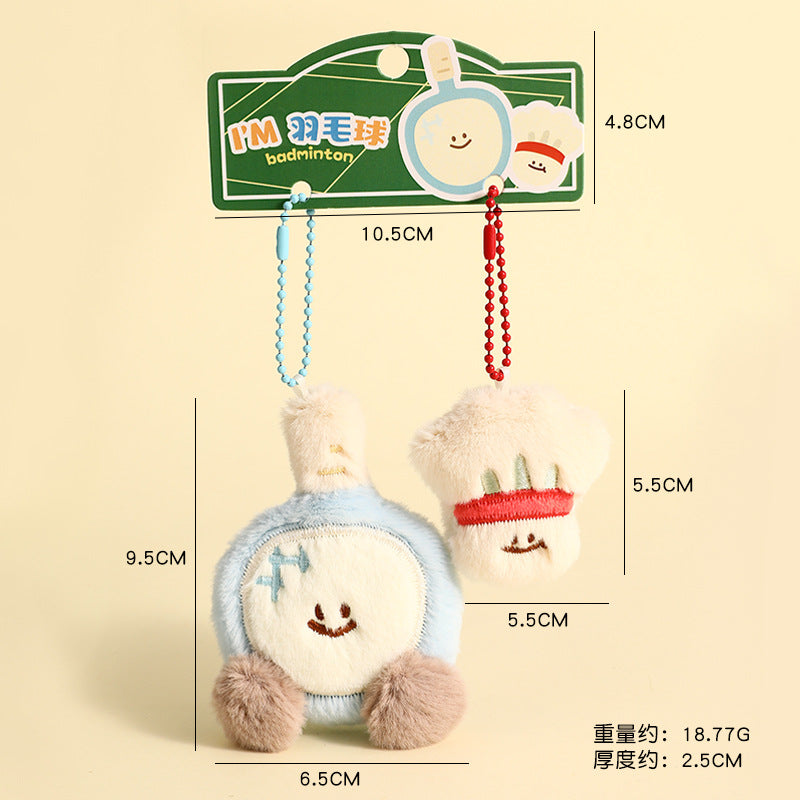
AccsWholesale lists a Plush Racket Keychain with its material recorded as plush. That description applies to the soft design, while the connecting chain or clasp may be made of a different material. The same distinction applies to bag charms and backpack accessories.
For soft products, inspect seams, loose embellishments, fabric wear, and how firmly the hanging loop is stitched or otherwise attached. They may be ideal for decorative use but less convenient when packed into a pocket alongside sharp metal keys. Check the whole product, not just whether the outer surface feels soft.




What Are Acrylic Keychains Made Of?
Acrylic keychains are generally made from polymethyl methacrylate (PMMA), a rigid thermoplastic also commonly known as acrylic. The visible charm may be a clear or colored acrylic sheet that has been cut to shape and decorated. Printed artwork, surface coatings, protective layers, and attached hardware can form part of the finished product, depending on the design.
This is a different process from curing resin in a mold or molding a flexible PVC figure. Acrylic's usefulness comes from the combination of its appearance, printable surface, and relatively low weight. It is well suited to flat charms, stylized outlines, and illustrations, although exact print durability and thickness depend on the supplier's process.
If you are comparing acrylic charms, look beyond whether the material is labeled “acrylic.” Consider the visible image quality, thickness, edge finish, number of layers if stated, protective film, and hole placement. A charm can have beautiful artwork but fail at the attachment point if the hole is poorly placed or the connecting ring is weak.
People sometimes ask whether acrylic is “plastic.” Yes: PMMA is a plastic. However, not every plastic keychain is acrylic. PVC, ABS, PLA, and other polymers may be used for different manufacturing methods, and calling every one of them acrylic would be inaccurate. For a beginner who wants to build rather than merely identify a keychain, our how to make keychains to sell article covers the broader making process separately.
What Metal Are Keychains Made Of?
Key rings and metal charms can be made from several metals, including steel, stainless steel, aluminum, brass, and zinc alloys. The exact choice depends on whether the component must spring open, carry keys, hold an engraved design, or form a decorative shape. One complete keychain may use more than one metal.
The circular ring deserves special attention. A split key ring needs some resilience so it can be opened to add keys and then return toward its intended shape. Spring-capable steel is one common approach. Stainless steel may also be used, but a silver finish alone cannot confirm it. Nickel plating or another finish can change a component's appearance without changing the metal underneath.
A metal charm has different requirements. Zinc alloy can be formed into decorative cast shapes. Aluminum can keep an accessory relatively light. Brass can provide a particular finish or weight. Stainless steel may suit tags or other metal parts where corrosion resistance is relevant. None of those general observations proves the alloy of a specific unverified listing.
When a seller describes a keychain simply as “metal,” avoid promoting it as “stainless steel” in the caption or metadata. On the other hand, if an official product description specifically identifies stainless steel, it is reasonable to use that more precise wording. This distinction is especially important for shoppers comparing material claims rather than merely comparing color.
Keychain Materials Comparison: Which One Fits Your Use?
There is no universal winner: appearance, softness, weight, customization possibilities, and daily handling matter in different ways. The following table is a practical qualitative guide, not a laboratory ranking or a guarantee about every product made from a material.
| Material | Typical feel and form | Practical use | Main check before choosing |
|---|---|---|---|
| Metal | Rigid, sometimes relatively heavy | Rings, tags, engraved or cast charms | Specific alloy, finish, edges, connection |
| Acrylic | Rigid, lightweight, often clear or printed | Artwork and decorative shapes | Thickness, print protection, edge and hole |
| Soft PVC | Flexible, molded shapes | Raised novelty charms | Actual formulation, shape, attachment |
| Silicone | Soft and elastic in suitable forms | Tactile and flexible accessories | Secure fitting, repeated-flex wear |
| Wood or bamboo | Firm with visible texture | Engraved and natural-look gifts | Wood identity, coating, moisture exposure |
| Leather or faux leather | Flexible strap or tab | Fobs, loops, wristlets | Genuine versus synthetic, stitching, rivets |
| Resin | Usually solid and molded after curing | Figurines, decorative effects | Surface finish, cracks, attachment |
| Fabric or plush | Soft, woven, knitted, or stuffed | Bags, backpacks, novelty charms | Seams, loop strength, embellishments |
For someone carrying several heavy keys daily, hardware security may be more important than charm decoration. A bag charm shopper may care more about weight, softness, and how the piece hangs from a zipper. Someone selling character merchandise may focus on color reproduction and how consistently the same design can be ordered again.
The term durable also needs context. A metal part may resist a certain kind of bending while its plating scratches. Acrylic can keep printed artwork visually crisp but be more vulnerable to some impacts. Plush feels forgiving to the touch but can collect dust or suffer seam wear. Compare the failure mode that matters for your actual use, not a single unsupported durability score.
How Are Keychains Typically Made?
The production method follows the material. Metal parts may be stamped, cast, cut, polished, plated, or engraved. Acrylic charms may be cut and printed. PVC or silicone shapes are commonly formed using suitable molds. Wooden tags can be cut and engraved. Resin designs are formed and cured using an appropriate resin system. Textile pieces are sewn, embroidered, knitted, or crocheted.
After the decorative component is made, it still has to be connected to usable hardware. The maker may add a hole, eyelet, loop, jump ring, clasp, short chain, or split ring. If the connector is not compatible with the charm, it can become the weak point. This is why looking at the whole assembly often tells you more than comparing the decorative material in isolation.
If you want to make keychains yourself, begin with one design and a material suited to the tools you can use safely. Pre-cut acrylic blanks, ready-made charms, and assembled hardware can reduce the number of manufacturing steps. Casting and curing materials require appropriate workspace procedures and product-specific safety instructions; no single method applies to all plastics or resins.
How Should Small Retailers Choose Keychain Materials to Resell?
For resale, start with the shopper's intended use, then match the material to that use. A boutique selling colorful art accessories may want rigid acrylic designs and soft novelty charms. A store selling understated gift items may prefer metal tags or leather-style fobs. A souvenir shop may need printed artwork, durable fittings, and repeatable packaging. The material is one decision; the product design and audience remain separate decisions.
If you want to test different styles instead of committing to one large batch, AccsWholesale offers wholesale keychains across multiple designs and materials. Its official listings provide concrete examples of acrylic, stainless steel, silicone, resin, plush, and general metal products. These are examples of documented product types; any material, weight, price, or stock claim should be checked on the individual product page before purchase.
A practical first assortment might compare an acrylic decorative charm against one rigid metal design and one soft item, rather than buying three visually similar acrylic charms. The goal is to learn which kind of product customers prefer. Record how customers use the item, whether hardware feels secure, how the finish holds up in ordinary handling, and whether the size suits bags or keys.
Calculate the complete landed cost of each product, not only the displayed unit price. Shipping, packaging, taxes or import charges where applicable, damaged units, and selling fees can affect the available margin. If your question is mainly about sourcing costs, the separate guide to low-cost keychains for small businesses provides a more appropriate next step than turning a materials guide into a supplier ranking.
A supplier comparison should distinguish ready-made keychains from custom manufacturing. Ordering a finished product in a particular material does not prove that the same business manufactures new shapes, prints your logo, or accepts design files. Customization, production lead time, and order minimums need their own verified terms. Material range alone is not proof of custom manufacturing capacity.
Before ordering, compare product descriptions with the actual photographed construction. Check how the charm joins the clasp, whether a ring is included, and whether the stated material belongs to the pendant, strap, or entire assembly. Ask for a sample or place a small permitted trial order when the physical characteristics will affect your resale claims.
Frequently Asked Questions About Keychain Materials
What are most keychains made of?
Many keychains combine a metal ring with a decorative component made of metal, acrylic, PVC, silicone, wood, resin, leather, or fabric. No reliable market-share evidence in this guide establishes which single charm material accounts for the most keychains globally. “Most keychains” is therefore better answered by explaining the typical assembly than by inventing a percentage or worldwide ranking.
What are rubber keychains made of?
The label “rubber keychain” can describe a flexible novelty charm, but the exact material may be rubber, soft PVC, silicone, or another elastomeric formulation depending on the supplier. Ask for a specific material field if the distinction affects your purchase or product description. Do not treat rubber, PVC, and silicone as chemical synonyms.
What are bendable keychains made of?
Bendable charms are often associated with flexible PVC, silicone, or rubber-like materials. Bendability is a physical property, not a complete chemical identification. A flexible plastic charm and a silicone charm can look similar in a photograph but have different compositions. Check the item specification before naming the material.
What are plastic keychains made of?
Plastic keychains can use acrylic (PMMA), PVC, ABS, PLA, or other polymers depending on whether they are cut, molded, printed, or made through additive manufacturing. Acrylic is one plastic category, not the name for every plastic. The ring or connector may still be metal.
What are liquid keychains made of?
Some novelty keychains have sealed transparent shells containing liquid and small decorative elements. The shell material, internal liquid, seal design, and decorative contents vary, so there is no single universal composition. Do not describe the liquid as water, oil, or another substance without a product-specific specification. Inspect any liquid-filled item for leakage and handling suitability.
What are sublimation keychains made of?
Sublimation keychains are made from compatible blanks that have a surface intended to accept a transferred design. The base may differ by product, and the printable coating or transfer surface is an important part of the construction. “Sublimation” describes a decoration process rather than one universal core material; check the blank manufacturer's compatible process and temperature requirements.
What are the metal things on keychains called?
Common terms include split ring, jump ring, key ring, lobster clasp, swivel clasp, and chain connector. They describe different functions: a split ring holds keys, a jump ring joins components, and a clasp attaches or detaches an accessory. Calling every fitting a “keyring” can make replacement-hardware shopping harder.
What are fabric keychains called?
Depending on their construction, fabric keychains may be called fabric key fobs, wristlet keychains, embroidered charms, crochet keychains, plush keychains, or pom-pom keychains. The correct term describes the form or method, not merely the presence of textile material.
Which keychain material is best for everyday use?
For frequent everyday use, prioritize sound metal hardware, secure connectors, and a shape that will not catch on clothing or damage objects around it. Stainless steel may be appealing for some metal components, but a well-designed keychain depends on the entire assembly. Acrylic, leather, and soft charms can also work when their design fits the task and their attachment is secure.
Final Answer: What Are Keychains Made Of?
Keychains are made from a broad range of materials, especially metal, acrylic, PVC, silicone, wood, leather, resin, and fabric or plush. The most important distinction is between the hardware that holds or attaches keys and the decorative part that gives the keychain its appearance. A keychain can be mostly acrylic, resin, or textile while still relying on a small metal connection.
When choosing a material, compare the exact component, intended use, finish, flexibility, weight, and connection quality. For clear printed artwork, acrylic is an obvious material to investigate. For rigid tags, look at metal choices and their disclosed alloys. For soft decorative pieces, distinguish PVC, silicone, and textiles rather than treating them as the same thing. If a seller does not disclose enough detail to substantiate a claim, the accurate next step is to ask—not to infer composition from the photograph.
Explore Keychain Styles by Material
Compare real keychain designs across different materials and check each product's specifications before selecting an assortment for your shop, gift range, or next project.
Browse Wholesale KeychainsRelated Posts

Why Do Cowgirls Wear Turquoise Jewelry? Western Heritage & Style
Why do cowgirls wear turquoise jewelry? This article explains how turquoise became associated with Western style while tracing the deeper...
Read More
How to Wear Turquoise Jewelry: Outfit Ideas & Styling Tips
Learn how to wear turquoise jewelry with practical outfit ideas for everyday looks, workwear, and evenings. This article explains which...
Read MoreInvalid password
Enter