




Access Denied
IMPORTANT! If you’re a store owner, please make sure you have Customer accounts enabled in your Store Admin, as you have customer based locks set up with EasyLockdown app. Enable Customer Accounts
When Were Italian Charm Bracelets Popular? Y2K History & Timeline
Publié par AccswholesaleBlog
on
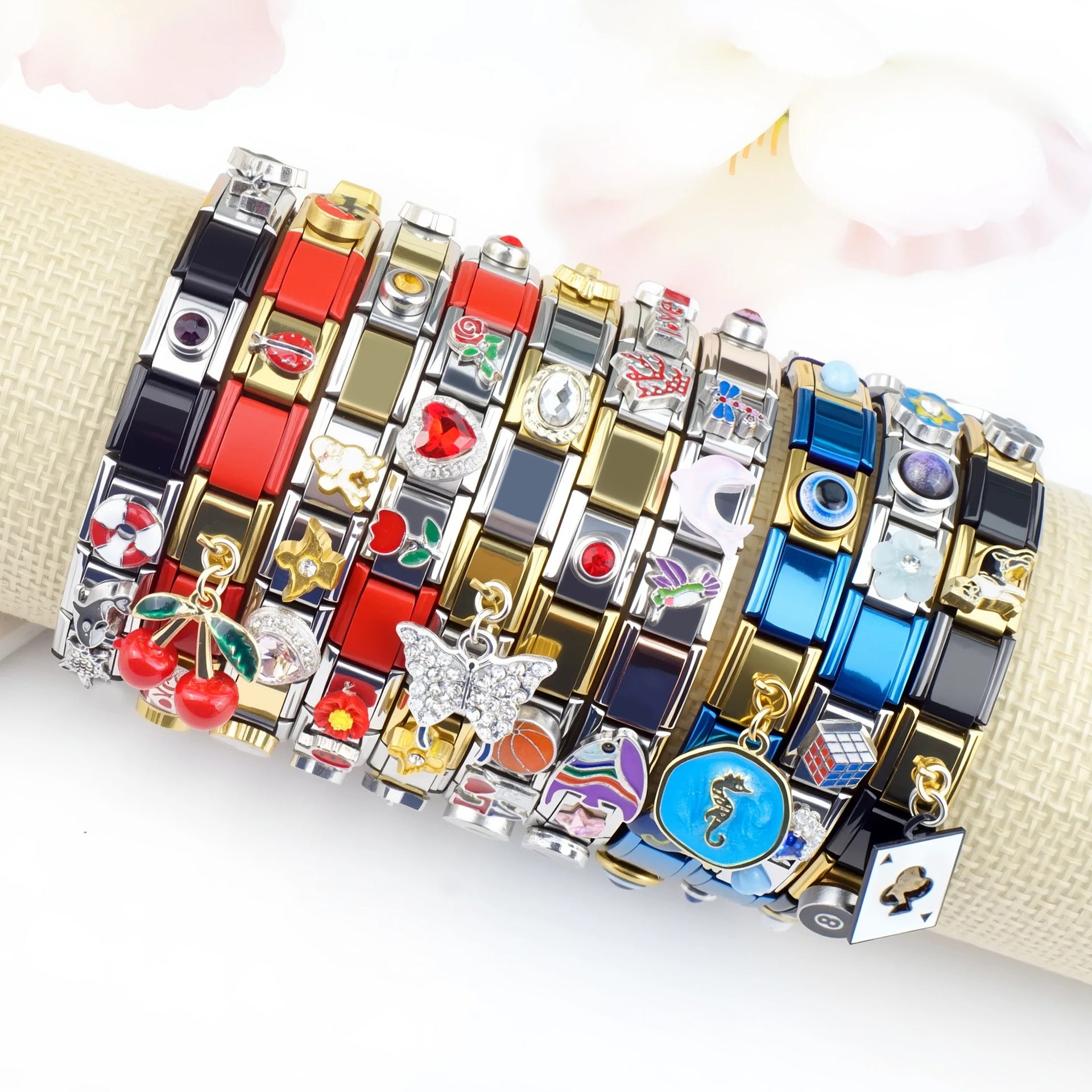
Italian charm bracelets were especially popular in the late 1990s and early 2000s, with their strongest mainstream recognition in the United States during the early-2000s Y2K era. The modular Composable bracelet originated in Italy in 1987, but that origin date is not the same as its later American fashion heyday. A new wave of interest emerged in the 2020s, especially around 2023. The historical evidence supports these broad periods; it does not establish a single worldwide peak year from audited sales figures.
Key Takeaways
- Italian charm bracelets became widely recognizable in the United States in the late 1990s and early 2000s.
- Nomination's Composable bracelet originated in Italy in 1987; that is the beginning of the product story, not the American popularity peak.
- The early-2000s look involved flat interchangeable links, personalized motifs, and bracelets that could change as someone collected more designs.
- “2000–2006” is a commonly cited approximate era, but no verified annual sales record here identifies a precise peak year.
- A revival associated with Y2K nostalgia and social platforms was being discussed in 2023.
- Today's Italian-style modular products are not automatically original Nomination pieces or made in Italy; brand, materials, and link compatibility require separate checks.
When Were Italian Charm Bracelets Most Popular?
The short historical answer is the late 1990s through the early 2000s. If someone remembers a flat, springy metal bracelet decorated with small rectangular images, letters, flags, or hearts during school years, the early-2000s period is likely what they have in mind. In the United States, that era made the style recognizable as an everyday personalized accessory rather than only a specialized Italian jewelry format.
There is a useful distinction between “popular,” “introduced,” and “peak.” Introduced means a design was brought to market. Popular means it became familiar to a wider public. Peak can imply a measurable maximum in sales, searches, or ownership. Historical journalism and brand retrospectives can establish the first two more confidently than the third. We therefore describe the early 2000s as the main mainstream fashion era rather than asserting that 2003 or 2005 was the highest-selling year.
The answer also depends on place. Nomination's origins are Italian, whereas American retrospectives concentrate on school-age shoppers, malls, and customizable jewelry in the United States. European adoption and United States mass-market recognition did not necessarily occur in the same year. Readers evaluating an inherited bracelet should not use the American craze as proof that a particular piece was made during those years; similar modular designs are sold today.
The most reliable way to use the timeline is as historical context. A bracelet with a square charm face resembles a familiar Y2K design language, but the pattern and construction alone cannot authenticate its age. If the question is “When was this look everywhere?” the answer is early-2000s fashion. If the question is “When was my exact bracelet made?” brand marks, packaging, purchase records, and model-specific information matter more than the overall trend.
Where Did Italian Charm Bracelets Come From?
Italian charm bracelets are associated with Italy because the original Composable modular bracelet was introduced by Nomination in 1987. The company's own historical account links the modular concept to its Italian origins. This point is particularly useful because later United States popularity can make the style seem like an exclusively American mall-era invention. Its commercial history starts earlier, and the familiar interlocking format predates the Y2K label.
An Italian charm bracelet is not simply a traditional chain with dangling pendants. In its conventional modular form, the bracelet is assembled from connected, generally flat links. Individual sections may carry a letter, a country flag, a symbol, or a decorative image, and the owner can replace links within a compatible system. This mechanical distinction helps explain why a collector could build a personal bracelet gradually rather than choose a permanently fixed design.
The name “Italian charm bracelet” can describe a type of modular jewelry, while “Nomination” identifies a particular company and its product families. Those two expressions are related but not interchangeable. A modern bracelet advertised as Italian-style does not thereby establish Nomination authorship, Italian manufacturing origin, or cross-brand fit. When discussing the original product, name the original company; when discussing a broader retail category, use the category name without attributing every later imitation or variation to the same manufacturer.
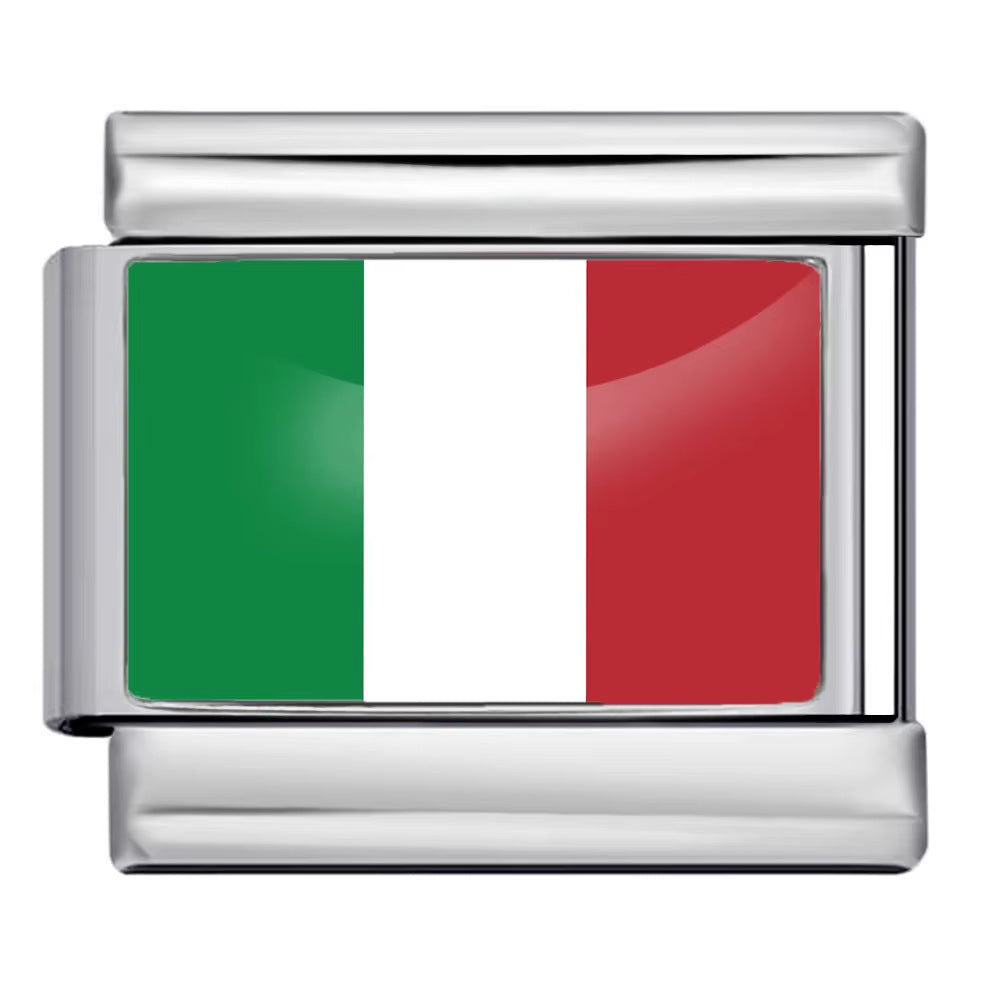
There is also a difference between the inspiration behind a product and a verifiable manufacturing statement. An Italy-themed flag charm, for example, evokes national imagery but does not prove that the metal link was manufactured in Italy. A buyer who needs country-of-origin certainty should check the actual product listing and supporting seller documentation. For a historical reader, this distinction keeps the origin story accurate without turning an illustrative modern charm into an antique artifact.
Nomination's official history is the best starting point for the original Composable chronology: the original Italian charm bracelet. The company perspective is valuable for the launch story, while independent coverage helps describe when the style became part of broader American fashion memory.
How Did Italian Charm Bracelets Become Popular in the 1990s?
The 1990s are the bridge between the Italian modular concept and the better-remembered early-2000s American craze. Historical accounts describe growing familiarity with the design outside Italy, including exposure through travel and later wider United States interest. A gradual spread is a more defensible account than assigning every American consumer the same first discovery date. The style did not arrive in every school, city, or store at once.
The bracelet was visually distinctive. Instead of hanging multiple pieces below a chain, it presented a continuous row of small metal rectangles across the wrist. Someone could recognize the outline instantly, yet each bracelet could look different because its links carried personal signs. A single initial, a hobby icon, or a favorite color could turn an otherwise standardized bracelet format into a distinctive item. That combination of recognizable structure and individual variation helps explain its appeal.
Retail presentation also mattered as a practical possibility, even where national sales figures are unavailable. Modular accessories can be displayed as completed bracelets or as individual components, so shoppers can see an immediate item and the possibility of adding to it. For families shopping for gifts, a single personalized link offered another way to acknowledge an interest or milestone. Those characteristics describe the product model; they should not be mistaken for a quantified claim about how many mall kiosks or stores sold the bracelets in a particular year.
By the end of the decade, the style had the ingredients for a mainstream accessory: a familiar base, a flexible collection of motifs, and a visible means of personal expression. Period accounts and later reminiscences associate its broad United States recognition especially with the transition into the 2000s. That is why a late-1990s dating description may be broadly plausible while an unqualified claim that the whole 1990s was the exact peak would overstate the evidence.
Why Were Italian Charm Bracelets So Popular in the 2000s?
The key attraction was personalization within an easy-to-recognize bracelet format. The linked metal base supplied a consistent silhouette, while the decorative faces allowed the wearer to tell a story. A name initial could sit beside a flower, a flag, a pet reference, or a symbolic heart. Two people could own bracelets built on the same general concept yet have visibly different combinations. That made the accessory compatible with the era's taste for individual signs and collectible fashion details.
This modularity changed how a bracelet could be acquired. A customer might first choose a starter bracelet, then consider replacing plain links with decorated pieces as their preferences changed. The same basic construction also makes gift giving straightforward: a motif selected for one person's interests can feel more specific than an unpersonalized accessory. These are features of the modular format, not claims that every historical seller offered the same merchandise or that every buyer actively traded links.
Another factor is the scale of the motifs. They are small enough to combine, allowing an alphabet letter, a birthstone-style color, or a playful symbol to share one wrist without requiring a separate chain for every item. Some designs have bright enamel-like decoration; others emphasize metallic finishes. The visual rhythm of repeated rectangles contributes to the particular early-2000s aesthetic, even when the individual designs vary widely. It is a very different expression from a single large statement pendant.

The collecting experience can also explain why the style remains memorable. An accessory linked to personal interests is more likely to be remembered as part of a particular school year, friendship, trip, or gift. Nostalgia is not an exact historical measuring instrument, but it helps explain why later readers ask about the years in which the bracelet was common. Media retrospectives such as VALLEY Magazine's look back at Italian charm bracelets are evidence of that cultural memory.
For a retailer, this history suggests a clear difference between selling an item and selling personalization possibilities. However, a history article should not invent conversion rates, average order values, or repeat purchase statistics. A modern store can offer individual links and bracelet bases, but that possibility alone does not prove that a particular 2002 retailer earned more revenue from charms. Readers seeking inventory advice should evaluate today's actual listings instead of extrapolating historical sales performance.
The Y2K association is useful shorthand, but it should be used precisely. Y2K describes a larger cultural and fashion moment around the turn of the millennium, not a certification that every example was created between two exact dates. Italian charms belong to the recognizable vocabulary of that period, alongside numerous other highly personalized accessories. A newly manufactured charm can express the same visual vocabulary without being vintage.
What Did Italian Charm Bracelets Look Like During Their Heyday?
The recognizable form was a connected, expandable row of flat metal links with decorative faces. Compared with traditional dangling charms, the illustrations sat on the bracelet surface itself. Many motifs could be arranged side by side, so the visual effect was closer to a small sequence of tiles than to separate objects swinging from a chain. The form makes it easy to recognize the broad type even when the individual link designs change across brands and decades.
Period-evoking motifs include initials, flags, hearts, symbolic images, colorful details, and hobby references. A link might identify a place someone liked, signal a favorite animal, or simply add a graphic accent. It is better to describe these as commonly recognizable kinds of decoration than to claim that one specific design was definitively the best-selling charm in the United States. An exhaustive ranked sales list is not established by the evidence available here.
Contemporary Italian-style modular charms show the continuing flexibility of the format. For example, a modern pink text motif and a longer whale-and-infinity design demonstrate how radically the decorative face can differ while the general idea remains a sequence of replaceable sections. These current images help readers understand the category. They cannot serve as historical photographs of teenage wardrobes or proof of the styles carried by a named store in 2004.


When identifying an older bracelet, focus on evidence beyond the picture. A recognizable charm design can be reissued. Finished metal color can change with wear, and personal links may have been replaced long after the initial purchase. Packaging, an original receipt, hallmarks where relevant, and documented model information offer stronger dating clues. If a seller describes an item as “vintage Y2K,” that is a claim to verify rather than accept solely because the piece resembles the early-2000s trend.
The category is also broader than one metal finish. Decorative links may feature various metallic tones and contrasting surfaces, depending on the product. Yet appearance does not prove stainless-steel grade, precious-metal purity, plating method, or a brand relationship. Those details require documentation for the actual product and, where multiple variants are offered, for the selected variant. Historical style labels are not substitutes for material specifications.
When Did Italian Charm Bracelets Fade, and When Did They Return?
As fashion preferences shifted after the early-2000s moment, the bracelet became less central to mainstream trend conversations. That does not mean production ceased, every owner stopped wearing one, or the jewelry disappeared from all markets. People keep meaningful jewelry long after a trend peaks, and collectible formats can retain enthusiasts even when newer accessories receive more attention. A drop in cultural visibility is not identical to the extinction of a product category.
The later revival is easier to observe in contemporary fashion coverage. By 2023, reporting connected renewed interest in Italian charm bracelets with Y2K nostalgia and short-form social-media discovery. In that context, the same customizable format gained a new audience that might have been too young to remember the first American craze. The modern comeback should be described as renewed attention, not an assertion that sales had returned to a historically documented peak.
This is where chronology matters. Some readers ask when the bracelets were popular because they have seen new examples and assume the style was invented recently. Others remember wearing them twenty years ago and want to know whether the original craze occurred in their school years. Both groups benefit from a timeline showing an original design in 1987, American mainstream visibility around the turn of the millennium, and renewed interest during the 2020s.
The 2023 return was discussed in nss magazine's coverage of the Italian charm bracelet resurgence. For a closer look at present-day popularity rather than the historical chronology, see Are Italian Charm Bracelets Back in Style in 2026?. The two questions should remain separate: this article establishes when the original style became popular, and the other evaluates a current trend.
An item produced in the 2020s may resemble one worn in the 2000s without being an original. Similarly, a genuine older bracelet may have newer replacement links. A collector should not date an entire modular bracelet solely by its most recent charm or infer that every component shares one manufacturing date. The appeal of replaceability makes that mistake particularly easy.
Are Original Nomination Bracelets the Same as Modern Italian Charms?
Not necessarily. Nomination's Composable is a historically significant branded product, while “Italian charm” is also used as a wider style description. That distinction matters when the buyer wants a particular origin, authorized branded jewelry, or proven mechanical fit. A generic Italian-style charm can be visually similar without being an original Nomination product. Calling every modular link a Nomination charm would blur a specific brand history with a broader accessory category.
Today a buyer may encounter complete bracelets, starter sections, flat symbol links, or decorative pieces with an extended motif. These formats should be assessed through their actual seller descriptions. The word “Italian” in a style designation is not, by itself, a country-of-origin certificate. An Italian flag printed on a charm is a decoration, not an origin statement. If a buyer is seeking original Italian-made branded jewelry, they should check the manufacturer's documentation and the product's provenance.
Compatibility is another separate question. A familiar rectangular face and a nominal 9mm description may help identify a likely modular family but do not establish that one company's component will fit another company's bracelet. The hook profile, spring action, dimensions, and named series can be important. For a dedicated explanation of these differences, read Are All Italian Charm Bracelets Compatible? 9mm & Brands. That detailed fit topic should not overwhelm a historical article.
The most useful distinction for a reader is therefore three-part: identify the era of the style, the brand or seller of the actual piece, and the link system that the piece uses. An object can be historically inspired without being historically old; it can be sold in an Italian-charm category without being made in Italy; and it can look right while requiring a different connector. Keeping those claims separate protects both accurate history and responsible purchase descriptions.
How Can You Explore Italian Charms Today Without Confusing Vintage and New?
Start by deciding what you actually want: a verifiable historical collectible, a current accessory with early-2000s styling, or interchangeable links for a bracelet you already own. These are different buying tasks. A collector may prioritize provenance and original packaging. Someone building a modern bracelet may prioritize current availability, theme variety, and whether replacement links fit. A boutique considering stock may prioritize consistent sourcing, clear specifications, and repeatable ordering terms.
For current designs, AccsWholesale offers a catalog of wholesale Italian charms, including modern modular links and bracelet options. The commercial link is provided for readers interested in contemporary products after learning the history; it is not evidence of how many units were sold during the original trend. Check the exact parent product and chosen variant because a product gallery can contain many visually different motifs and offer terms.

Personalization remains a sensible starting point for choosing a design. Think about what the charms are supposed to express: initials, places, activities, symbols, or gifts associated with particular memories. Then check whether the seller presents the same mechanical link format across the pieces you intend to combine. If the bracelet is from a named brand, ask for model-specific compatibility information rather than assuming all pieces described as Italian charms are interchangeable.
For shop owners, modern bracelet bases and individual designs can be considered as separate assortment categories. A store might show a completed example to explain the concept and display selected links nearby. But the historical popularity described in this guide does not forecast present sales volume or justify buying a large quantity of an untested variant. Evaluate current unit descriptions, quantity rules, shipping charges, and material claims at the product level. Avoid using undated screenshots as proof of a current price.
It is also useful to separate a design's sentimental value from its resale value. A bracelet made from personally significant symbols can be valuable to its owner regardless of its secondhand market price. For collectors, historical provenance, condition, authenticity, and demand may affect value. This guide does not offer an appraisal or a price table, because the evidence used to answer “when were they popular?” is not enough to value every bracelet.
A reasonable first purchase decision is to understand the style, inspect the actual product specifications, and confirm compatibility before combining links. That approach honors the original concept of a personal modular bracelet without treating a modern piece as an authenticated relic. For the history question itself, the main answer remains unchanged: the familiar American craze belongs chiefly to the late 1990s and early 2000s.
Frequently Asked Questions About Italian Charm Bracelet History
What were Italian charm bracelets called in the 1990s?
They were described as Italian charm bracelets or by branded names such as Nomination's Composable line. “Nomination” is a company name, not the universal name of every interchangeable-link bracelet. Terminology differed between sellers and markets. If you are researching an old item, identifying its actual brand and model is more reliable than assuming that every flat linked bracelet had the same trademarked name.
Did Italian charm bracelets exist before the 2000s?
Yes. Nomination introduced the Composable concept in Italy in 1987, before the well-remembered American mainstream boom. A product's introduction is not the same event as its later surge in popularity. The late-1990s and early-2000s descriptions refer mainly to broad fashion recognition rather than the first creation of the format.
Were Italian charm bracelets more popular in the 1990s or 2000s?
The evidence supports widespread recognition from the late 1990s into the early 2000s, with the early 2000s particularly prominent in American retrospectives. There is not enough verified year-by-year sales data in this guide to declare one precise year the global winner. Broad periods are more defensible than invented rankings.
Did people wear Italian charm bracelets in 2003?
Yes, 2003 falls within the commonly remembered early-2000s era. That establishes the cultural plausibility of the style in that year, not the exact manufacturing date of a bracelet you find today. For a specific item, look for receipts, branding, documentation, and consistent product history.
What is the original Italian charm bracelet?
The original Composable modular bracelet is associated with Nomination, introduced in Italy in 1987. Modern Italian-style modular bracelets may use similar-looking interchangeable rectangular links, but their branding, origin, materials, and connector systems should be assessed independently. A similar appearance is not proof of authenticity.
Do people still wear Italian charm bracelets?
Yes, the style has received renewed attention, including a Y2K-related revival discussed in 2023. Today's wearers may be revisiting a remembered design or discovering modular personalization for the first time. Current fashion popularity is a separate question from the original early-2000s heyday, so avoid using nostalgia alone to infer current market demand.
Are Italian charm bracelets worth money today?
Some may have resale or collectible value, but there is no single value for all Italian charm bracelets. Brand, documented age, material, condition, originality, and buyer interest can matter. An unverified vintage label or a familiar rectangular silhouette does not establish a collectible price. A proper valuation requires evidence about the actual item, not only the decade when the style was fashionable.
Were all Italian charm bracelets made in Italy?
No such conclusion follows from the category name. The original Nomination story is rooted in Italy, but later products described as Italian-style modular charms may have different manufacturing origins. Examine the brand's official statement and individual product documentation if country of manufacture is important. Even an Italian flag decoration does not establish where a link was made.
Final Answer: When Were Italian Charm Bracelets Popular?
Italian charm bracelets were most closely associated with the late 1990s and early 2000s, especially the early-2000s mainstream fashion moment in the United States. Their origins go back to Nomination's 1987 Composable design in Italy, while a recognizable Y2K revival was being reported in 2023. Remember these as distinct milestones—origin, widespread popularity, and revival—rather than treating one approximate date range as a verified worldwide sales peak. Modern links can evoke the same style without being original vintage pieces.
Explore Today's Italian Charm Designs
Browse modern modular links and bracelet styles through AccsWholesale's Italian charm collection. Select products by their actual design and published specifications; check brand, material, and link compatibility before ordering. These modern examples illustrate the adaptable style, not the age of a vintage item.
Explore Wholesale Italian CharmsRelated Posts

Are Italian Charm Bracelets Actually Italian? Origin vs. Made in Italy
Italian charm bracelets have genuine Italian roots, but the name does not guarantee that every bracelet is made in Italy....
En savoir plus
Are Italian Charm Bracelets Back in Style in 2026?
Italian charm bracelets are back in the fashion conversation in 2026, driven by Y2K nostalgia, collectible links, and renewed interest...
En savoir plusInvalid password
Enter